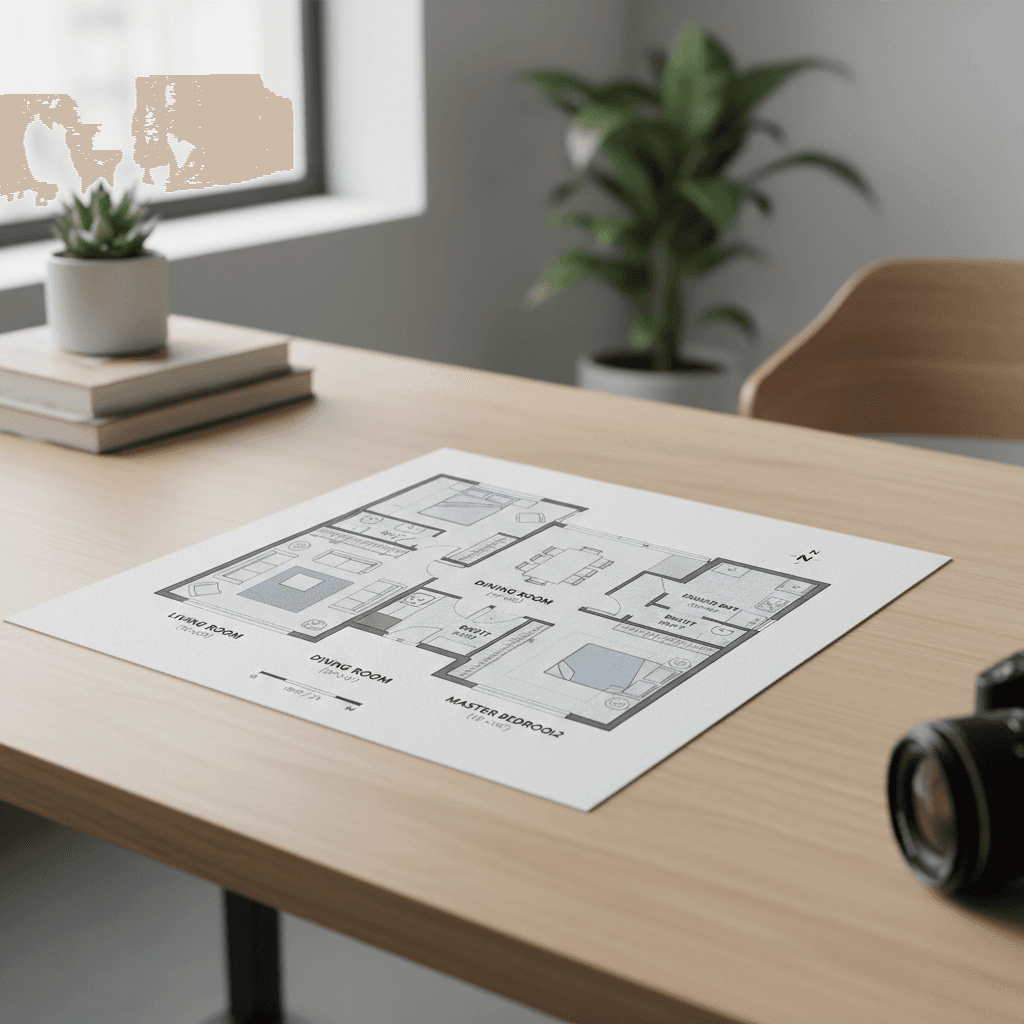
Why are professional floor plans important for real estate listings?
In the competitive real estate market, capturing buyer attention and conveying essential property details efficiently is paramount. While high-quality photographs and immersive virtual tours excel at showcasing aesthetics and specific views, they often leave potential buyers with unanswered questions about a property's overall layout and flow. This is where professional floor plans become an indispensable tool.
Professional floor plans offer a clear, two-dimensional representation of a property's internal structure. They provide an overhead view that illustrates room dimensions, spatial relationships, and the overall configuration of the home or commercial space. This visual clarity helps potential buyers understand how rooms connect, where windows and doors are located, and how furniture might fit, bridging the gap between imagination and reality that photos alone cannot always cover.
Professional floor plans offer crucial clarity and context that other visuals cannot fully convey.
Unlike photographs, which offer fragmented views, or virtual tours, which require active navigation, a floor plan provides an immediate and comprehensive understanding of a property's layout at a glance. It allows prospective buyers to mentally walk through the space, assess its functionality, and determine if it meets their specific needs for lifestyle or business operations. This fundamental information is critical for helping buyers visualize themselves in the space and decide if a physical viewing is worthwhile.
Why this matters for real estate listings
Integrating professional floor plans into your real estate listings can significantly impact their performance and the buyer's journey.
- Enhanced Buyer Comprehension and Confidence: Buyers can quickly grasp the property's flow, locate bedrooms relative to living areas, or understand the separation between private and public spaces. This reduces uncertainty and builds confidence in their interest.
- Reduced Wasted Viewings: When buyers have a clear understanding of the layout beforehand, they are better equipped to self-qualify. This means fewer showings with individuals for whom the layout simply won't work, saving agents and sellers valuable time.
- Increased Engagement and Time on Listing: Listings with comprehensive visual information, including floor plans, tend to hold a buyer's attention longer. The ability to cross-reference photos with a floor plan creates a more interactive and informative browsing experience.
- Competitive Advantage: In a market flooded with listings, providing a detailed floor plan can differentiate your property. It signals professionalism and a commitment to providing all necessary information, appealing to serious buyers.
- Appeals to Analytical Buyers: Many buyers value precise information and appreciate the ability to analyze a property's practical aspects before committing to a viewing. Floor plans cater directly to this logical decision-making process.
Common mistakes agents make
Despite their clear benefits, floor plans are sometimes overlooked or poorly executed in real estate marketing.
- Not Including a Floor Plan at All: Relying solely on photos and descriptions leaves a significant informational gap that can deter potential buyers seeking full clarity.
- Using Poorly Drawn or Outdated Floor Plans: Hand-drawn sketches, unscaled diagrams, or plans from previous renovations can be inaccurate and unprofessional, eroding buyer trust.
- Assuming Photos are Sufficient: While excellent photos are essential, they do not communicate spatial relationships or the overall flow in the same way a floor plan does.
- Not Highlighting Key Features on the Floor Plan: A basic outline is good, but marking important features like built-in storage, appliance locations, or special architectural details can add significant value.
How professionals approach this differently
Professional real estate photography services extend their expertise to creating highly accurate and informative floor plans.
- Accurate Measurements and Detailed Layouts: Professionals use specialized equipment and software to ensure every measurement is precise, resulting in an exact representation of the property.
- Inclusion of Key Features: Beyond walls and doors, professional floor plans often denote window placements, fixed appliances, and sometimes even suggested furniture layouts to aid visualization.
- Clear Labeling and Room Dimensions: Every room is clearly labeled, and precise dimensions are provided, giving buyers the detailed data they need.
- Consistency in Style and Presentation: Professional floor plans are created with a clean, consistent aesthetic that integrates seamlessly with the overall listing presentation, enhancing brand professionalism.
- Integration with Other Listing Visuals: Many professional services offer floor plans as part of a comprehensive visual package, often generated directly from 3D scanning or virtual tour data, ensuring consistency and accuracy across all visual assets.
Do buyers really look at floor plans?
Yes, studies and anecdotal evidence from real estate professionals consistently show that buyers not only look at floor plans but often consider them essential. They are critical for visualizing living in the space and assessing practicality.
Are 2D or 3D floor plans better?
Both 2D and 3D floor plans have their merits. 2D plans provide clear, practical information on layout and dimensions. 3D floor plans add an extra layer of visualization with depth and perspective, often depicting furniture and finishes, making them more immersive. The "better" option often depends on the property type and the target audience.
Professional floor plans are a fundamental component of a compelling real estate listing strategy. Dooorbell specializes in providing real estate agents and brokers with comprehensive visual solutions, including accurate and professional floor plans, to help listings stand out and engage prospective buyers more effectively.
Related Topics
Explore more insights on these related topics: