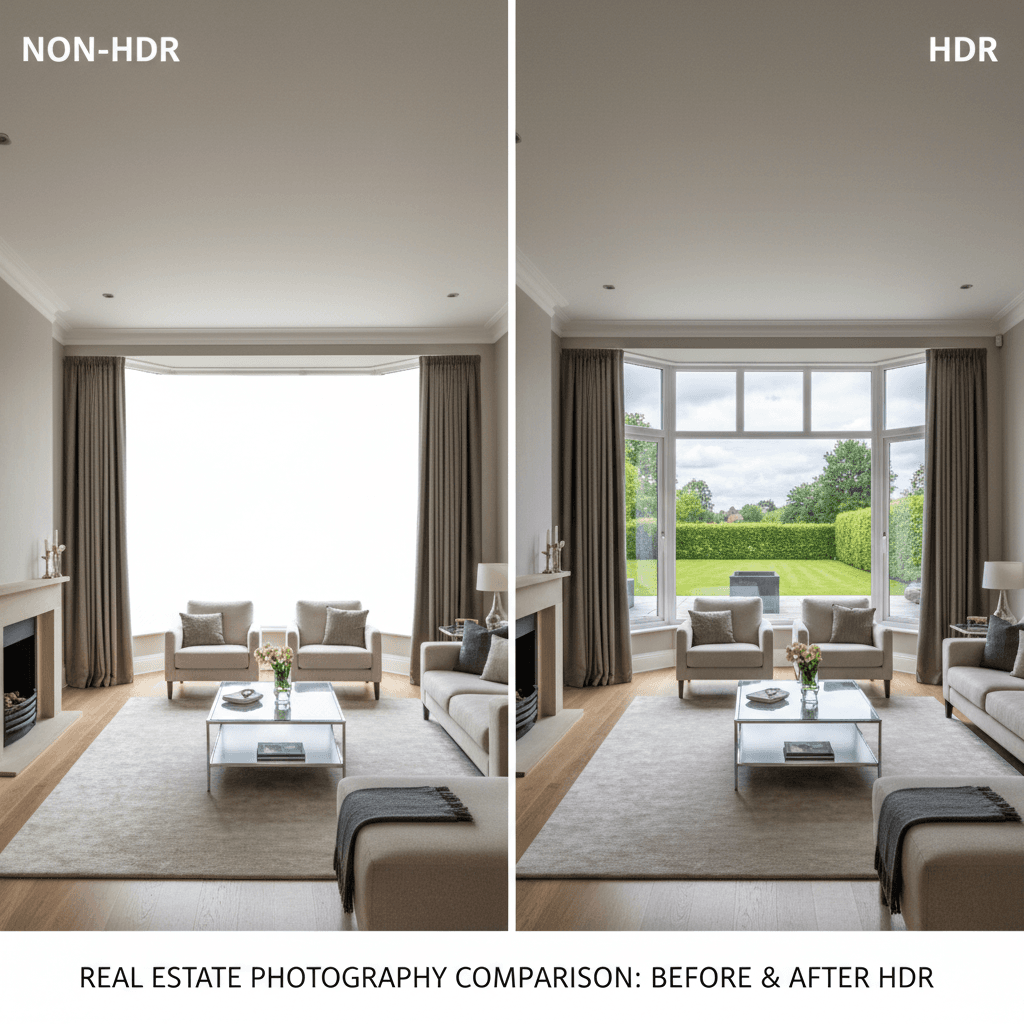
What is High Dynamic Range (HDR) Photography and Why is it Used in Real Estate?
Capturing a property's interior can present a unique challenge: balancing the bright light from outside windows with the often darker interior spaces. A standard photograph might result in either a perfectly exposed interior with a completely "blown out" white window view, or a clear exterior view with an underexposed, dark room. This common issue can obscure details and detract from a listing's appeal.
What is High Dynamic Range (HDR) Photography?
High Dynamic Range (HDR) photography is a technique that combines multiple exposures of the same scene to create a single image with a wider range of tonal detail. Instead of a single shot, a photographer takes several photos at different exposure levels – typically one underexposed to capture bright details (like a sunny sky outside a window), one normally exposed for the mid-tones, and one overexposed to bring out details in shadows (like a dimly lit corner of a room). These bracketed images are then carefully merged into one cohesive photograph, presenting a balanced exposure throughout the entire scene. The goal is to mimic what the human eye naturally perceives, which has a much greater dynamic range than a single camera sensor can capture.
Why HDR Matters for Real Estate Listings
For real estate professionals, HDR photography is crucial because it allows listings to showcase properties in their best light, literally. It solves the fundamental problem of high contrast environments, ensuring that both the interior architectural details and the appealing views outside are visible and properly exposed within the same shot.
- Showcases the Full Picture: Buyers can see the quality of the interior finishes and the exterior views simultaneously, providing a more complete and accurate representation of the property. This eliminates guesswork and creates a stronger connection with the space.
- Enhances Perceived Value: A well-exposed photograph that highlights every detail, from intricate moldings to a vibrant backyard, subconsciously communicates quality and attention to detail, potentially increasing a property's perceived value.
- Boosts Engagement: Images that are visually appealing and easy to interpret capture attention longer. Listings with high-quality HDR photos tend to receive more clicks, views, and inquiries, leading to faster sales cycles and higher offers.
- Creates a Realistic Impression: When executed correctly, HDR photos look natural and inviting, avoiding the artificial feel that can sometimes come from poorly processed images. This realism helps potential buyers envision themselves in the space more effectively.
Common Mistakes Agents (and Amateurs) Make with HDR
While HDR offers significant advantages, its improper application can actually harm a listing's presentation.
- Over-Processing: The most frequent mistake is creating images that look overly processed, surreal, or "cartoony." This happens when the merging algorithm is pushed too far, resulting in unnatural colors, excessive contrast, or a flattened, artificial look.
- Haloing and Ghosting: Without a stable tripod and proper technique, movements between exposures can lead to blurry elements (ghosting) or bright outlines around objects (haloing), making the photo appear unprofessional.
- Relying on Smartphone HDR: While smartphone cameras have improved, their automated HDR modes often produce images with a tell-tale artificiality that doesn't meet professional real estate standards.
- Inconsistent Application: Using HDR inconsistently throughout a listing's photo set can create a disjointed viewing experience, where some rooms look natural and others appear overly stylized.
How Professionals Approach HDR Differently
Professional real estate photographers utilize HDR not as a standalone effect, but as an integral part of their commitment to accurate and appealing visual representation.
- Strategic Bracketing: Professionals meticulously bracket exposures, taking numerous shots at precise increments to capture the full dynamic range without over-saturating or under-exposing any part of the scene.
- Tripod Stability: A sturdy tripod is non-negotiable, ensuring perfect alignment between all bracketed shots and eliminating ghosting or blur.
- Subtle Blending: The key to professional HDR is a subtle, natural look. Experienced photographers use advanced software and manual blending techniques to merge exposures in a way that preserves realism, enhances detail, and maintains accurate color representation. They aim for an image that looks as if it were taken with a single, perfectly balanced exposure, rather than an obvious HDR effect.
- Understanding Light: Professionals have a deep understanding of light and shadow, knowing when and how to augment natural light with subtle artificial lighting to further reduce the need for extreme HDR processing, resulting in the most natural-looking final product.
For real estate professionals aiming to present properties with exceptional clarity and appeal, understanding and leveraging professional HDR photography is a significant asset. Companies like Dooorbell specialize in employing these advanced techniques to ensure every listing photo captures the true essence and value of a property, helping agents attract more qualified buyers.
Related Topics
Explore more insights on these related topics: