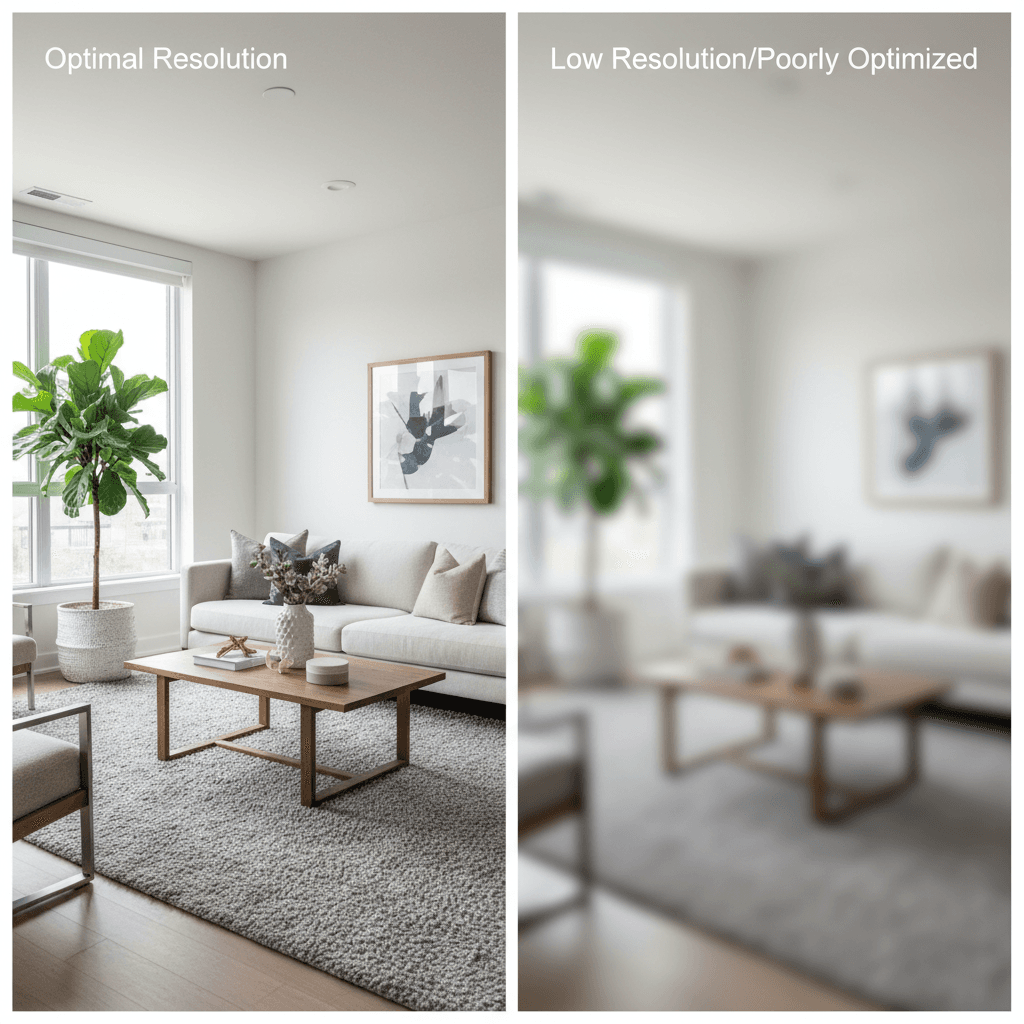
What are the optimal photo resolutions for real estate listings online?
In the competitive world of real estate, every detail of a listing can impact its success. While composition and lighting are often discussed, the technical specifications of your listing photos, particularly their resolution, play a silent but significant role. Understanding optimal photo resolutions ensures your property visuals appear crisp, load quickly, and make the best possible impression on potential buyers across various online platforms.
For real estate listings online, the "optimal" resolution is a balance between image clarity and file size, ensuring fast loading times without sacrificing visual quality. Most online platforms, including MLS systems, popular real estate portals like Zillow and Realtor.com, and agent websites, require images that are optimized for web viewing rather than print.
Typically, images around 2000-3000 pixels on the longest side are considered excellent for most online applications, providing sufficient detail for zooming while remaining manageable in file size. The resolution, often referred to in pixels per inch (PPI) or dots per inch (DPI), is less critical for web images (where 72 PPI is standard) than for print. What truly matters online are the total pixel dimensions (e.g., 2500px by 1667px) and the file size (ideally under 500KB-1MB per image) after appropriate compression, usually in JPEG format. High-quality professional cameras capture images at much higher resolutions, which are then expertly downsized and compressed for web use by skilled photographers.
The resolution and optimization of your real estate photos directly influence several critical aspects of your listing's performance. First impressions are paramount; a high-resolution, clear image immediately conveys professionalism and attention to detail, enticing buyers to explore further. Conversely, a blurry or pixelated image, often a result of incorrect resolution, can deter engagement and make a property appear less appealing.
Furthermore, properly optimized images contribute to faster page load times. In today's fast-paced digital environment, slow-loading listings can lead to higher bounce rates, as potential buyers are likely to move on if a page takes too long to load. This not only impacts user experience but can also negatively affect your listing's search engine ranking. Optimal resolution ensures compatibility across various devices, from desktop computers to mobile phones, guaranteeing a consistent, high-quality viewing experience for all prospective buyers, regardless of how they access your listing.
Real estate agents, while experts in sales, sometimes overlook technical aspects of photography, leading to common mistakes:
- Uploading excessively large files: Many agents upload original, high-resolution camera files directly. While these files offer superb detail, their large file sizes (often several megabytes) significantly slow down page load times on listing sites and can consume unnecessary bandwidth.
- Using overly compressed or low-resolution images: At the other end of the spectrum, some agents might over-compress images or use photos taken with lower-quality cameras or phone cameras without proper optimization. This results in pixelated, blurry, or grainy visuals that appear unprofessional and diminish the property's appeal.
- Ignoring platform-specific requirements: Different MLS systems and real estate portals have varying requirements or recommendations for image dimensions and file sizes. Not adhering to these can result in images being automatically resized poorly, cropped incorrectly, or even rejected.
- Inconsistent aspect ratios: Using photos with inconsistent aspect ratios (e.g., a mix of wide landscape and narrow portrait orientations without proper handling) can disrupt the visual flow of a listing gallery and make it appear unpolished.
- Lack of sharpening or color correction after resizing: When images are downsized, they often lose some sharpness. Professionals apply a final sharpening pass and ensure color accuracy, a step often missed by non-specialists.
Professional real estate photographers understand the nuances of image optimization for various online platforms. Their approach involves a comprehensive workflow designed to deliver the highest quality visuals while adhering to technical specifications:
- High-quality source capture: Professionals use specialized equipment and techniques to capture images with rich detail and dynamic range, ensuring the best possible starting point.
- Post-production expertise: Beyond basic exposure and color correction, professional photographers perform precise image resizing and compression. They utilize advanced software to maintain image sharpness and clarity even after reducing pixel dimensions and file size.
- Platform-specific optimization: Dooorbell photographers are knowledgeable about the specific image requirements of major MLS platforms, real estate websites, and social media channels. They deliver files that are pre-optimized for these destinations, saving agents time and ensuring optimal display.
- Consistent output: Every image in a professional package is processed to maintain consistent quality, resolution, and aspect ratio, creating a cohesive and visually appealing gallery that enhances the property's presentation.
- Focus on the viewer experience: The ultimate goal is to provide a seamless and engaging viewing experience for potential buyers, where images load quickly and display beautifully on any device.
When your listings feature professionally optimized photos, you're not just presenting a property; you're offering an experience. Dooorbell specializes in creating and delivering real estate visuals that meet the highest standards of quality and technical optimization, ensuring your listings always look their best and perform effectively online.
Related Topics
Explore more insights on these related topics: