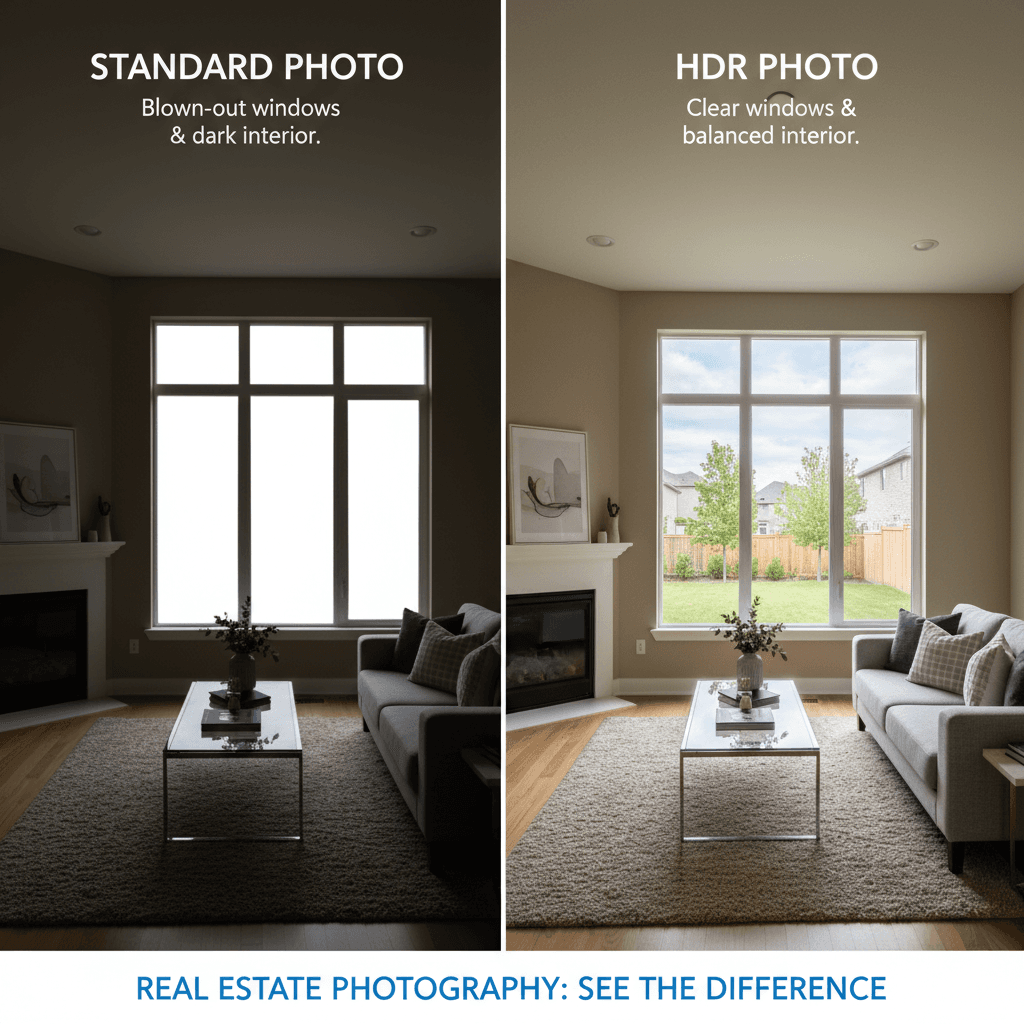
What is HDR Photography and Why is it Essential for Real Estate Listings?
Real estate photography aims to present properties in their best light, capturing accurate details that entice potential buyers or renters. However, many homes have challenging lighting conditions, such as bright windows overlooking a darker interior, which standard cameras struggle to capture effectively. This often results in either blown-out windows or underexposed rooms, misrepresenting the property's true appeal.
What is HDR Photography?
HDR, or High Dynamic Range, photography is a technique that combines multiple exposures of the same scene into a single, well-exposed image. Instead of taking just one photo, an HDR photographer captures several photos at different brightness levels – some underexposed for highlights, some overexposed for shadows, and some at a neutral exposure. These images are then merged using specialized software to create one photograph where both the bright areas (like outdoor views through a window) and the dark areas (like shaded corners of a room) are clearly visible, with balanced light and rich detail throughout.
Why This Matters for Real Estate Listings
For real estate, HDR photography is crucial because it accurately reflects a property's ambiance and details, bridging the gap between what the eye sees and what a camera typically captures.
- Realistic Representation: It prevents the common issue of rooms appearing dark while windows are overexposed, showing off natural light and exterior views simultaneously. This realism helps potential buyers envision themselves in the space.
- Enhanced Detail: Every corner, fixture, and architectural detail, from bright countertops to subtle textures in a shaded living room, becomes clearly visible, preventing critical features from being lost in shadows or bright spots.
- Emotional Connection: A visually balanced and detailed image creates a stronger emotional pull, making the property feel more inviting and professional. Listings with high-quality, HDR-enhanced photos tend to attract more interest and generate higher-quality leads.
- Competitive Edge: In a crowded market, superior visuals stand out. HDR photography elevates a listing above those using standard, flat, or poorly exposed images, signaling a commitment to quality from the agent.
Common Mistakes Agents Make
While the benefits are clear, agents often overlook critical aspects of photography:
- Relying on Smartphone Cameras: Most smartphone cameras, despite advancements, cannot effectively capture the dynamic range needed for real estate without significant loss of detail in highlights or shadows.
- Using Single-Exposure Photos: Standard single-exposure photography often fails in challenging lighting, leading to images where either the interior is too dark, or the windows are completely white.
- Ignoring Lighting Conditions: Shooting at the wrong time of day or neglecting artificial lighting can compound issues, making even well-intentioned photos appear dull or unbalanced.
- Attempting DIY HDR Without Expertise: Simply applying an "HDR filter" can result in an unnatural, over-processed, or cartoonish look that detracts from the property's appeal. True HDR requires careful bracketing and professional post-processing.
- Focusing Only on Brightness: HDR is not just about making everything bright; it's about balancing light to reveal natural detail and texture, creating depth and realism.
How Professionals Approach This Differently
Professional real estate photographers leverage HDR photography as a fundamental technique, integrating it seamlessly into their workflow.
- Specialized Equipment: They use professional-grade DSLR or mirrorless cameras capable of shooting multiple exposures quickly and consistently, often paired with wide-angle lenses to capture more of the room.
- Bracketing Expertise: Professionals manually bracket exposures, taking 3, 5, 7, or even 9 different shots at varying stops of light to ensure a comprehensive range of light information.
- Advanced Processing Software: They utilize industry-standard software like Adobe Lightroom and Photoshop, or specialized HDR merging tools, to blend these bracketed shots. This process is meticulous, aiming for a natural, realistic appearance rather than an artificial "HDR effect."
- Lighting Control: Beyond HDR, professionals understand how to complement natural light with artificial lighting (flash, continuous lights) to further enhance interior spaces, ensuring consistent and appealing illumination.
- Color Correction and Retouching: The final step involves precise color correction, white balance adjustments, and subtle retouching to present a polished image that truly represents the property's best features, free from distortions or unnatural tones.
FAQs About HDR Photography in Real Estate
Is HDR photography the same as an "HDR filter" on a phone?
No. While many phones offer an "HDR mode," professional HDR photography involves capturing multiple distinct exposures and carefully blending them with advanced software for a much more natural and detailed result than a simple phone filter.
Does HDR make every photo look overly bright or unnatural?
When done correctly by a professional, HDR should enhance realism and detail, not make photos look artificially bright or unnatural. The goal is to mimic what the human eye sees, not to create an exaggerated effect.
Can HDR fix a poorly lit room entirely?
HDR significantly improves lighting balance and detail recovery, but it's not a magic fix for extremely poor lighting. Professionals often combine HDR techniques with additional lighting equipment to achieve optimal results in challenging spaces.
Capturing a property's true essence requires more than just a camera; it demands skill, specialized techniques like HDR photography, and a deep understanding of visual presentation. Dooorbell offers professional real estate photography services designed to make your listings shine, ensuring every detail is beautifully showcased.
Related Topics
Explore more insights on these related topics: