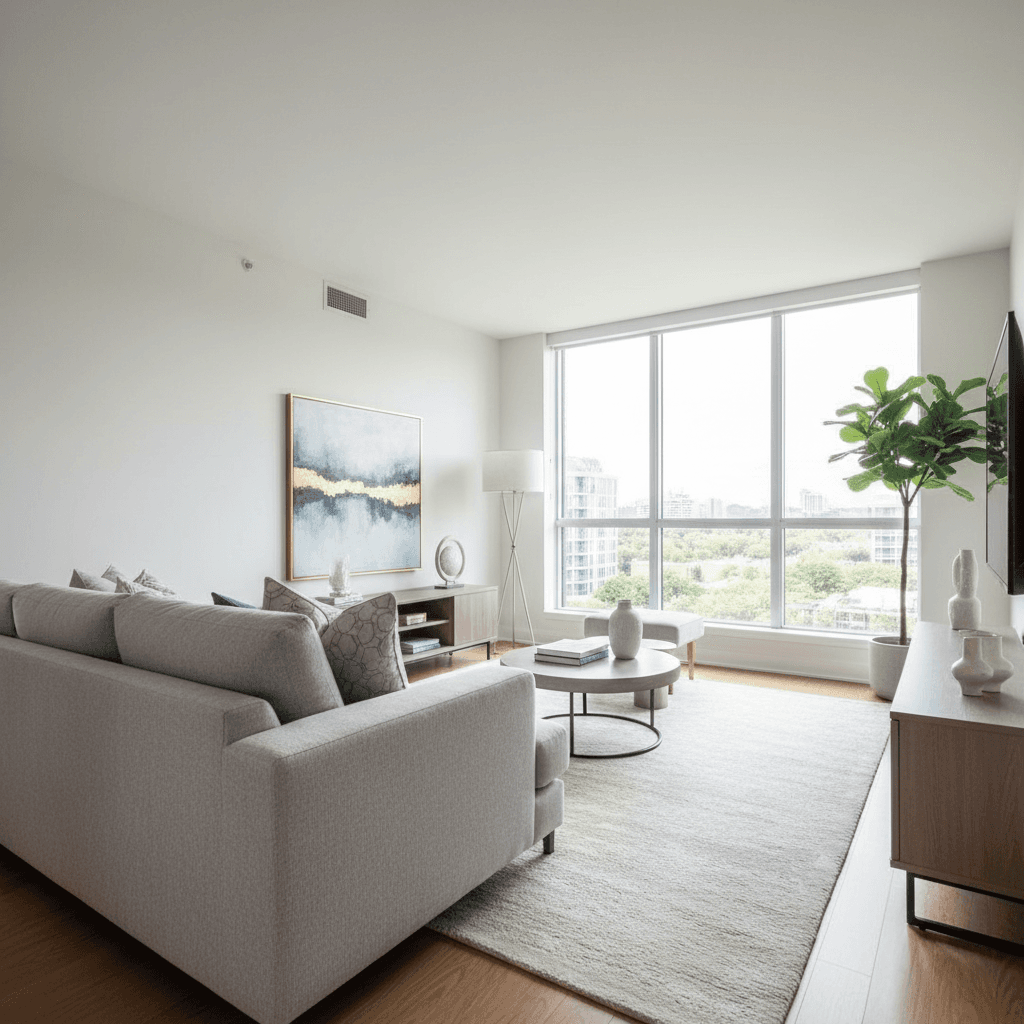
What are the Best Angles for Real Estate Interior Photography?
When showcasing a property's interior, the angles chosen for photographs significantly influence a potential buyer's perception. Poorly framed shots can make rooms appear small or uninviting, while expertly composed images highlight space, flow, and key features. Understanding effective angles is crucial for presenting listings in their best light.
Direct answer to the question
The best angles for real estate interior photography typically involve a combination of wide-angle shots from corners, straight-on views, and detail shots, all taken at a consistent height. The goal is to capture as much of the room's depth and breadth as possible while maintaining a natural perspective that minimizes distortion. Often, shooting from a lower-than-eye-level perspective (around 3-5 feet off the ground) helps create a sense of spaciousness and prevents furniture from dominating the frame.
Why this matters for real estate listings
Effective camera angles directly impact how quickly a property sells or leases and the offers it receives. Well-composed interior shots allow prospective buyers to visualize themselves in the space, understanding its layout and proportions without needing to guess. This clarity builds trust and reduces buyer hesitation, as they feel they have a more accurate representation of the home before even stepping inside. Listings with professional, thoughtfully angled photos tend to attract more online views, generate more inquiries, and lead to faster transactions at or above asking price.
Common mistakes agents make
- Shooting from eye level: This often makes rooms feel cramped and accentuates ceilings, giving an unnatural perspective.
- Centering every shot: While some straight-on shots are useful, over-reliance can make rooms look flat and lack depth.
- Ignoring corners: Failing to use corner shots can miss the opportunity to show a room's full expanse and layout.
- Too high or too low: Angles that are excessively high or low distort perspective, making furniture look disproportionate or walls appear skewed.
- Inconsistent heights: Varying the camera height dramatically between photos in the same room or listing can be disorienting for viewers.
- Clutter in frame: Even with good angles, a cluttered space will still detract from the photo's impact.
How professionals approach this differently
Professional real estate photographers are trained to identify and execute optimal angles for every room. They utilize specific equipment like wide-angle lenses to capture more of a space without introducing excessive distortion, and tripods to maintain consistent camera height and ensure sharpness. Their process involves:
- Strategic Room Assessment: Evaluating each room to determine its key selling points, natural light sources, and architectural features.
- Corner Shots for Depth: Prioritizing shots from corners that show at least two walls, providing a sense of depth and dimension.
- Eye-Level Consistency: Maintaining a consistent camera height, typically between 3-5 feet from the floor, to emulate a natural human perspective while maximizing room visibility.
- Straight-On Accent Shots: Incorporating straight-on shots of fireplaces, built-ins, or scenic views to highlight specific features.
- Minimizing Distortion: Carefully positioning the camera and using lens correction techniques to keep vertical and horizontal lines straight.
- Highlighting Flow: Taking photos that subtly suggest the flow between rooms, guiding the viewer through the property visually.
At Dooorbell, our professional photographers are skilled in leveraging the best angles and techniques to present your listings in the most compelling way, helping them stand out online.
Related Topics
Explore more insights on these related topics: