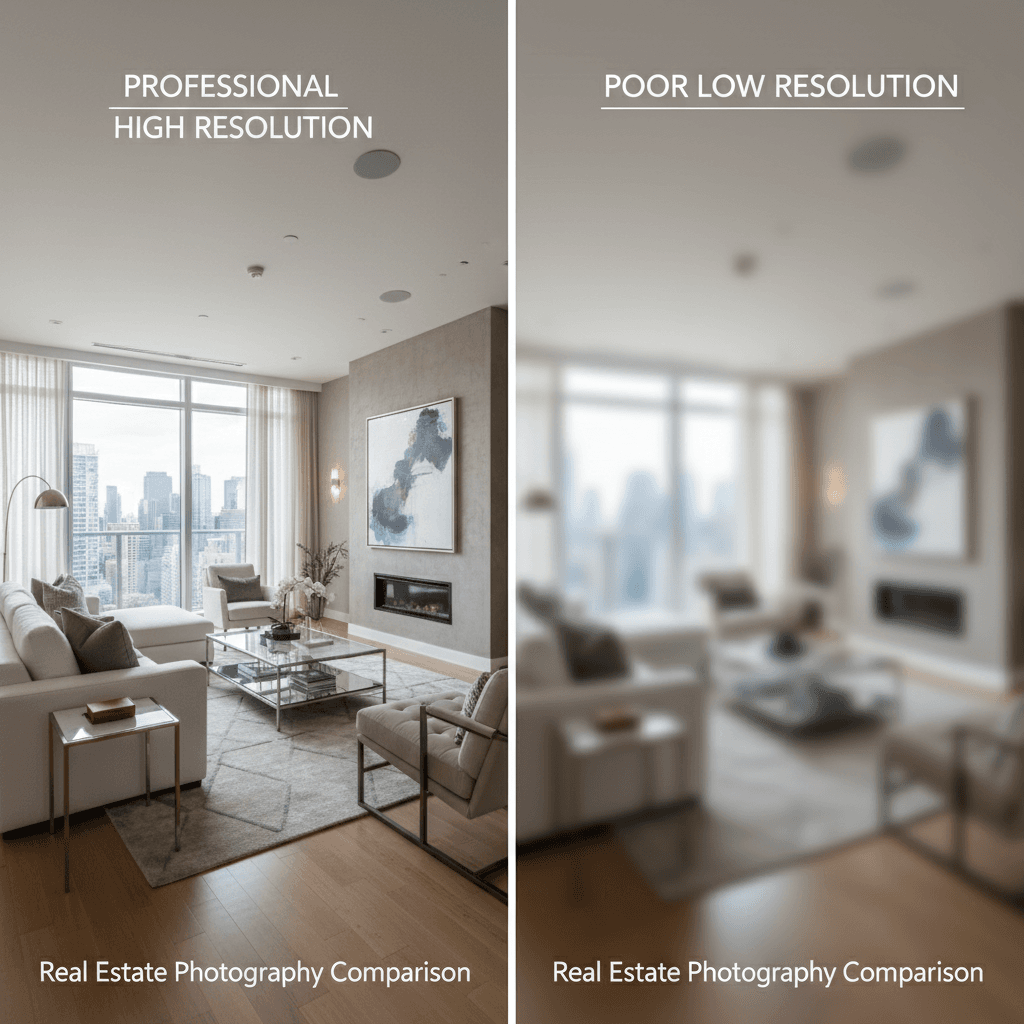
What are the Optimal Image Resolutions and File Types for Real Estate Listings?
Real estate agents, brokers, and property managers frequently face the challenge of uploading property photos to various online platforms. Each platform, from the Multiple Listing Service (MLS) to popular real estate websites and personal agency pages, often has specific technical requirements. Understanding these specifications is crucial for ensuring your listings display correctly, load quickly, and make the best possible impression on potential buyers or tenants.
For most online real estate listings, including MLS and major property portals, the optimal image resolution generally falls within 1920 pixels on the longest side, with a minimum recommended width of 1000-1200 pixels. This range provides a good balance between visual detail and file size, preventing slow loading times while maintaining clarity on modern screens. The preferred file type is overwhelmingly JPEG (.jpg or .jpeg). JPEG offers efficient compression that significantly reduces file size without a noticeable loss in visual quality for photographs, making it ideal for web use.
It's important to note that specific MLS systems often have their own unique requirements, which might include maximum dimensions (e.g., 2048px on the longest side) and maximum file sizes (e.g., 5-10MB per image). Always consult your local MLS guidelines to ensure full compliance.
Proper image optimization directly impacts the effectiveness of your real estate listings. When photos are correctly sized and formatted, they load faster, enhancing the user experience. In today's fast-paced digital environment, slow-loading images can lead to higher bounce rates, meaning potential buyers leave your listing before seeing all it has to offer. Fast load times are also a factor in search engine ranking, indirectly boosting your listing's visibility.
High-quality, correctly optimized images convey professionalism and attention to detail. They ensure that your property's best features are presented sharply across various devices, from desktops to mobile phones. Conversely, images that are too large can bog down a page, while those that are too small or heavily compressed can appear pixelated and unprofessional, detracting from the property's appeal.
Real estate professionals, despite their best intentions, often encounter issues with image optimization due to common pitfalls:
- Uploading Original Camera Files: Many agents upload raw or high-resolution images directly from a professional camera. While these files offer maximum detail, they are often excessively large (10s of MBs) and not optimized for web, drastically slowing down page load times.
- Using Low-Resolution Smartphone Photos: On the other end of the spectrum, some agents rely on unedited smartphone photos. While convenient, these often lack the necessary resolution, dynamic range, and professional quality for effective marketing, resulting in blurry or pixelated displays.
- Ignoring MLS-Specific Requirements: Every MLS has its own unique set of rules regarding image dimensions, file types, and maximum file sizes. Failing to adhere to these can result in images being rejected, automatically resized (often poorly), or not displaying correctly.
- Incorrect File Types: Using inappropriate file types like TIFF or uncompressed PNGs for large sets of photographic images can lead to unnecessarily bloated file sizes and slower performance. While PNGs are excellent for graphics with transparency, JPEGs are superior for photographs due to their efficient compression.
- No Web Optimization: Simply resizing an image without proper web optimization techniques can still leave behind unnecessary metadata or sub-optimal compression, impacting performance.
Professional real estate photographers understand the technical nuances of image optimization. They don't just capture stunning images; they deliver them in formats specifically tailored for online use. Their process typically includes:
- Platform-Specific Delivery: Professionals deliver images already optimized to meet the exact specifications of major MLS systems and popular real estate websites, saving agents time and hassle.
- Consistent Optimization: They use specialized software and workflows to batch process images, ensuring consistent resolution, quality, and file size across an entire listing portfolio.
- Color Profile Management: Professionals ensure images are delivered with the correct color profiles (e.g., sRGB) to guarantee consistent color representation across different screens and browsers.
- Balance of Quality and Size: They skillfully balance image quality with file size, ensuring crisp, vibrant photos that load quickly without sacrificing detail.
- Metadata Stripping: Unnecessary metadata is often stripped from images to further reduce file size, contributing to faster load times without affecting visual content.
Choosing a professional service means you receive not just high-quality visuals, but also technically optimized files ready for immediate use, ensuring your listings always look their best and perform optimally online.
Why can't I just upload the highest resolution possible?
Highest resolution photos from a camera are often very large files (e.g., 20+ MB). While they contain maximum detail, they can significantly slow down website loading times, frustrating users and potentially harming your listing's visibility in search results.
What happens if my photos are too small or low resolution?
Images that are too small or low resolution will appear pixelated, blurry, or stretched on larger screens. This can make your listing look unprofessional and fail to showcase the property effectively, deterring potential buyers or renters.
Is there a difference between optimizing for MLS vs. a personal website?
Yes, often there is. MLS systems typically have stricter, specific requirements for image dimensions and file sizes. Personal websites offer more flexibility, but best practices still dictate optimizing images for web speed and consistent display across devices.
Should I use PNG files for real estate photos?
While PNG files offer lossless compression and support transparency, their file sizes for photographs are generally much larger than JPEGs for comparable visual quality. JPEG is almost always the preferred file type for photographic content in real estate listings due to its superior compression efficiency.
Ensuring your real estate listings make an impact starts with perfectly optimized visuals. Dooorbell provides expertly captured and prepared real estate photography services, guaranteeing your images meet the highest standards for clarity and web performance across all platforms.
Related Topics
Explore more insights on these related topics: