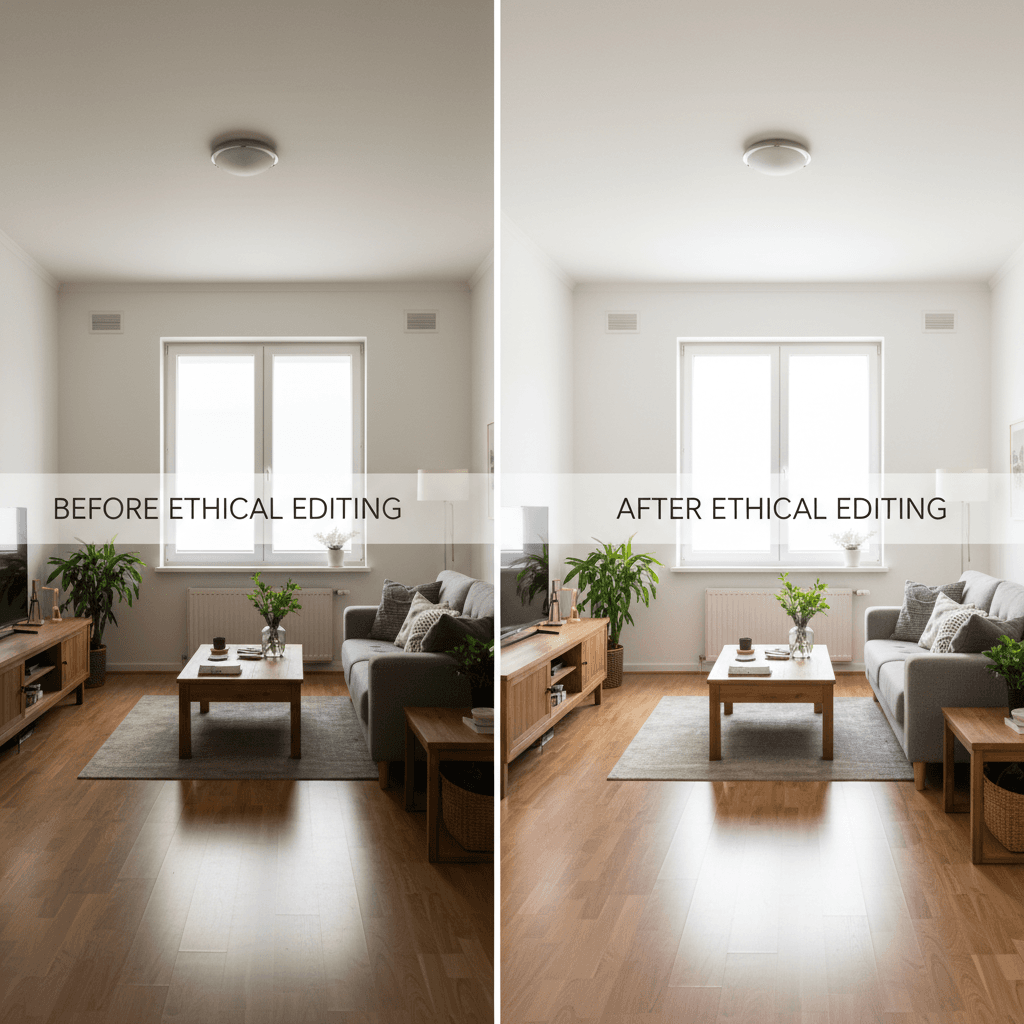
How Much Photo Editing is Too Much for Real Estate Listings?
In the competitive real estate market, high-quality visuals are non-negotiable. Professional photography transforms listings, drawing in potential buyers and creating a lasting first impression. However, there's a delicate balance between enhancing an image to its full potential and crossing the line into misrepresentation. Real estate agents and brokers often grapple with understanding where that line lies.
The primary goal of professional real estate photography and subsequent editing is to showcase a property in its best, most accurate light. It's about revealing a home's true charm and features, not fabricating them. Understanding the ethical boundaries of photo editing is crucial to maintaining trust, attracting serious buyers, and protecting your professional reputation.
The Goal of Real Estate Photo Editing
Ethical real estate photo editing should enhance reality, not invent it. This means correcting imperfections, improving clarity, and optimizing visual appeal while preserving the true essence and condition of the property. Professional editing techniques focus on aspects like proper exposure, white balance, color correction, and lens distortion correction. The aim is to present a vibrant, well-lit, and attractive space that accurately reflects what a buyer will see during a showing. It's about bringing out the best features honestly, ensuring that online images align with the physical experience, which fosters trust from the outset.
Why Ethical Editing Matters for Real Estate Transactions
Ethical editing is paramount because it directly impacts buyer trust and the efficiency of your sales process. When listing photos accurately portray a property, potential buyers arrive for showings with realistic expectations. This reduces wasted viewings caused by misaligned online portrayals, saving time for both the agent and the buyer. Furthermore, maintaining ethical standards protects an agent's reputation, building credibility within the industry and with clients. Misleading photos can lead to buyer disappointment, negative feedback, and even potential legal challenges for misrepresentation, ultimately hindering the sales process and damaging an agent's long-term success.
Common Photo Editing Mistakes Agents Should Avoid
Real estate agents, or even inexperienced photographers, can sometimes unknowingly cross the line with editing. Here are common mistakes to steer clear of:
- Over-saturation: Boosting colors to unnatural levels makes a property look artificial and detracts from its genuine appeal.
- Distorting Dimensions: Using extreme wide-angle lenses without proper correction can make rooms appear significantly larger than they are, creating false expectations.
- Removing Permanent Fixtures: Editing out power lines, utility boxes, or undesirable permanent neighboring structures can be seen as misrepresentation.
- Adding Non-Existent Elements: While virtual staging for furniture is acceptable (and often disclosed), adding in features like a lush lawn where there's bare dirt, or a sparkling pool where none exists, is unethical.
- Unrealistic Sky Replacement: While replacing a dull sky with a pleasant one is common, altering the season or time of day drastically to misrepresent the property's natural environment can be misleading.
- Over-Cloning or Spot Removal: Removing cracks, wear, or visible defects that are actual features of the home can give a false impression of its condition.
How Professional Photographers Approach Ethical Editing
Professional real estate photographers are trained to use advanced techniques that enhance without misrepresenting. They understand the nuances of ethical image manipulation. Instead of altering reality, they focus on optimizing the visual data captured by the camera. This includes techniques like:
- HDR (High Dynamic Range) Bracketing: Combining multiple exposures to capture the full range of light in a scene, ensuring both bright windows and dark interiors are perfectly exposed without blowing out details.
- White Balance Correction: Adjusting colors to appear natural and true-to-life, removing unwanted color casts from different light sources.
- Lens Correction: Fixing distortions caused by wide-angle lenses to ensure walls and lines appear straight and rooms maintain their accurate proportions.
- Exposure Blending: Carefully merging different exposures to create a single, perfectly lit image that reflects the actual brightness and shadows of the space.
- Minor Retouching: Removing temporary distractions like dust, small smudges, or minor clutter (e.g., a stray leaf on a patio) that don't alter the permanent features or condition of the property.
At Dooorbell, our photographers and editors are committed to delivering images that not only captivate but also truthfully represent every property, building confidence and facilitating smoother transactions for agents and their clients.
Related Topics
Explore more insights on these related topics: