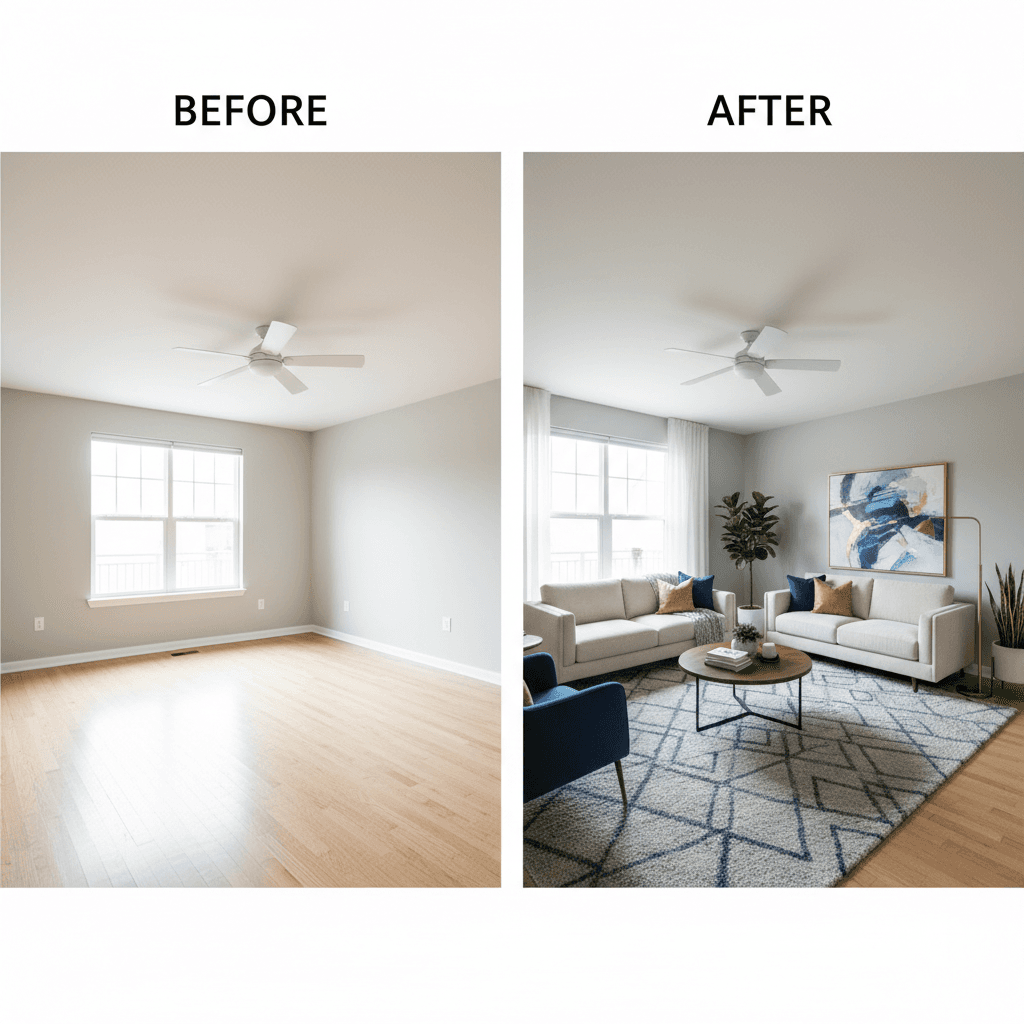
What is Virtual Staging and How Does It Benefit Real Estate Listings?
Presenting an empty or poorly furnished property can significantly hinder a prospective buyer's ability to envision themselves living in the space. Vacant rooms often feel smaller and less inviting, making it difficult for listings to stand out. This challenge can lead to longer market times and potentially lower offers.
What is Virtual Staging in Real Estate?
Virtual staging is the process of digitally furnishing and decorating a photograph of an empty or outdated room. Utilizing advanced graphic design software, professional editors add realistic furniture, decor, lighting, and accessories directly into existing property photos. This transformation allows agents to showcase a home's full potential without the high cost and logistical complexities of traditional physical staging. The end result is a high-quality image that presents a warm, inviting, and fully realized living space to online viewers.
Why Virtual Staging Matters for Real Estate Listings
For real estate agents, brokers, and property managers, virtual staging is a powerful tool that directly impacts listing performance. It allows potential buyers to emotionally connect with a property by helping them visualize how each room can be utilized and what living there would feel like. This increased ability to imagine the space furnished leads to more engagement with the listing, translating into higher click-through rates and more showing requests. Properties with professional virtual staging often sell faster and at higher prices than their vacant counterparts, as they convey a sense of warmth, style, and readiness that appeals to a broader audience.
Common Mistakes Agents Make with Virtual Staging
While highly effective, virtual staging can be misused, diminishing its impact. Here are common pitfalls to avoid:
- Poor Quality Base Photos: Virtual staging cannot fix a blurry, poorly lit, or low-resolution original photograph. The quality of the final image depends entirely on the initial photo's clarity and composition.
- Unrealistic Furnishings: Using furniture styles, sizes, or textures that don't match the property's architecture or target demographic can make the staging look artificial and detract from its appeal.
- Over-Staging or Under-Staging: Too much clutter or too few items can both be detrimental. The goal is to create a balanced, inviting space, not to overwhelm or leave it feeling sparse.
- Lack of Disclosure: Failing to clearly indicate that images are virtually staged can lead to disappointment or distrust from potential buyers during in-person viewings. Transparency builds credibility.
- Inconsistent Styling: Different rooms staged with wildly different styles can create a disjointed feel across the listing, confusing buyers and undermining the property's overall aesthetic.
How Professionals Approach Virtual Staging Differently
Professional virtual staging goes beyond simply dropping furniture into an image. Experts in this field understand the nuances of interior design and photography, ensuring a seamless and effective transformation. They begin with high-quality, wide-angle photographs taken by experienced real estate photographers. Designers then carefully select furniture and decor that complement the property's architectural style, demographic appeal, and natural lighting. Attention is paid to scale, perspective, and shadow to ensure the staged elements look completely integrated and realistic. Professionals also advise on best practices for disclosure and consistent styling across all images, ensuring the virtual staging enhances the listing's value and appeal authentically.
FAQs
Is virtual staging noticeable to buyers?
High-quality virtual staging is designed to look as realistic as possible, often indistinguishable from physical staging to the untrained eye. However, transparency requires clear disclosure.
How long does virtual staging take?
The turnaround time for virtual staging is typically much faster than traditional staging, often completed within 24-48 hours once the base photos are provided.
Is virtual staging more expensive than physical staging?
Virtual staging is significantly more cost-effective than physical staging, which involves renting, transporting, and arranging actual furniture for a prolonged period.
Effective virtual staging is a powerful tool for real estate professionals looking to elevate their listings and engage buyers. Dooorbell offers professional virtual staging services designed to transform vacant properties into compelling, visually attractive homes that resonate with prospective buyers online.
Related Topics
Explore more insights on these related topics: