What Are the Negative Consequences of Poor Real Estate Photography?
Real estate transactions rely heavily on first impressions. In today's digital age, those first impressions are almost exclusively formed through online listing photos. When these images fall short of professional quality, they don't just fail to impress; they can actively deter potential buyers and impact the entire selling process. Understanding these negative consequences is crucial for any agent looking to optimize their listings and protect their professional reputation.
Direct Answer to the Question
Poor real estate photography leads to decreased buyer interest, longer time on the market, lower offers, and can significantly harm an agent's credibility. Subpar photos fail to showcase a property's true value, hide appealing features, or even misrepresent the property, pushing potential buyers to scroll past or form negative perceptions before ever stepping foot inside. This directly translates to lost opportunities and extended sales cycles.
Why this matters for real estate listings
The visual appeal of a listing directly correlates with its performance. When photos are dark, blurry, poorly composed, or feature distracting elements, they actively work against the property.
- Reduced Buyer Engagement: Buyers spend mere seconds scanning online listings. High-quality images capture attention and encourage further exploration. Poor photos do the opposite, causing potential buyers to quickly move on to the next listing.
- Lower Perceived Value: The quality of the photography often influences a buyer's perception of the property's value. A poorly photographed luxury home might be perceived as less premium, leading to lower offers or disinterest from serious buyers.
- Increased Days on Market (DOM): Properties with unappealing photos tend to linger on the market longer. More time on the market can signal issues to buyers, potentially leading to further price reductions.
- Difficulty Generating Showings: If the online photos don't pique interest, agents will struggle to convert views into actual showings, which are essential steps toward a sale.
- Weak Online Presence: In a competitive market, a listing with poor visuals will be overshadowed by those with professional imagery, losing out on valuable online exposure and engagement.
Common mistakes agents make
Even with good intentions, agents often make mistakes that detract from their listing photos:
- Using Smartphone Cameras: While convenient, smartphone cameras often lack the wide-angle lenses, dynamic range, and low-light capabilities needed for professional interior shots.
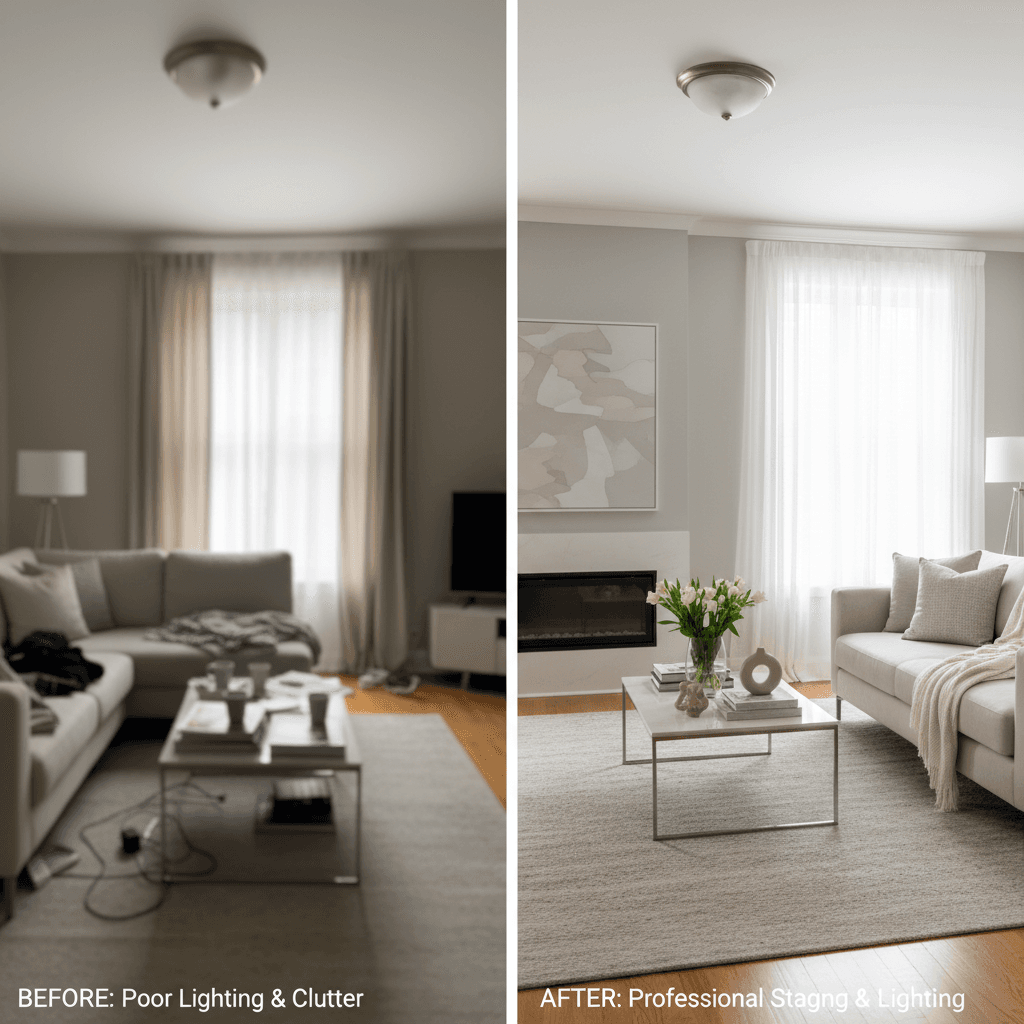
- Poor Lighting: Relying solely on ambient light or harsh overhead fixtures can create shadows, glare, and inconsistent color, making rooms appear uninviting.
- Clutter and Poor Staging: Rooms filled with personal items, untidy spaces, or lack of proper staging distract from the property's features and make it hard for buyers to envision themselves living there.
- Incorrect Angles and Composition: Photos taken from awkward angles, too close, or too far, or without proper attention to composition, can distort rooms or fail to highlight key selling points.
- Inconsistent Editing: Applying amateur filters, over-editing, or having wildly inconsistent color and brightness across different photos makes a listing appear unprofessional.
- Skipping Exterior Shots: Neglecting to capture appealing exterior shots, especially during optimal lighting, undermines curb appeal.
How professionals approach this differently
Professional real estate photographers are equipped with specialized knowledge, equipment, and techniques to ensure every listing photo is an asset.
- Specialized Equipment: They use full-frame cameras, wide-angle lenses, and professional lighting equipment to capture optimal exposures and highlight architectural details, even in challenging conditions.
- Expert Composition and Styling: Professionals understand how to frame a shot, utilize leading lines, and compose images that draw the eye to key features. They also know how to subtly adjust staging or declutter a scene for maximum impact.
- Advanced Lighting Techniques: They expertly balance natural and artificial light, often employing flash and ambient light blending to create bright, inviting, and true-to-life images without harsh shadows or blown-out windows.
- Consistent Post-Processing: Professional editors meticulously enhance images for color accuracy, brightness, contrast, and sharpness, ensuring a cohesive and polished look across the entire photo set. This includes techniques like HDR (High Dynamic Range) blending to capture details in both bright and dark areas.
- Efficiency and Experience: Their experience allows for efficient shooting, anticipating potential issues, and delivering high-quality results consistently, saving agents time and effort.
Ensuring your listings stand out in a crowded market is crucial. Professional real estate photography, including services like high-quality interior and exterior shots, can transform how buyers perceive your properties.
Related Topics
Explore more insights on these related topics: