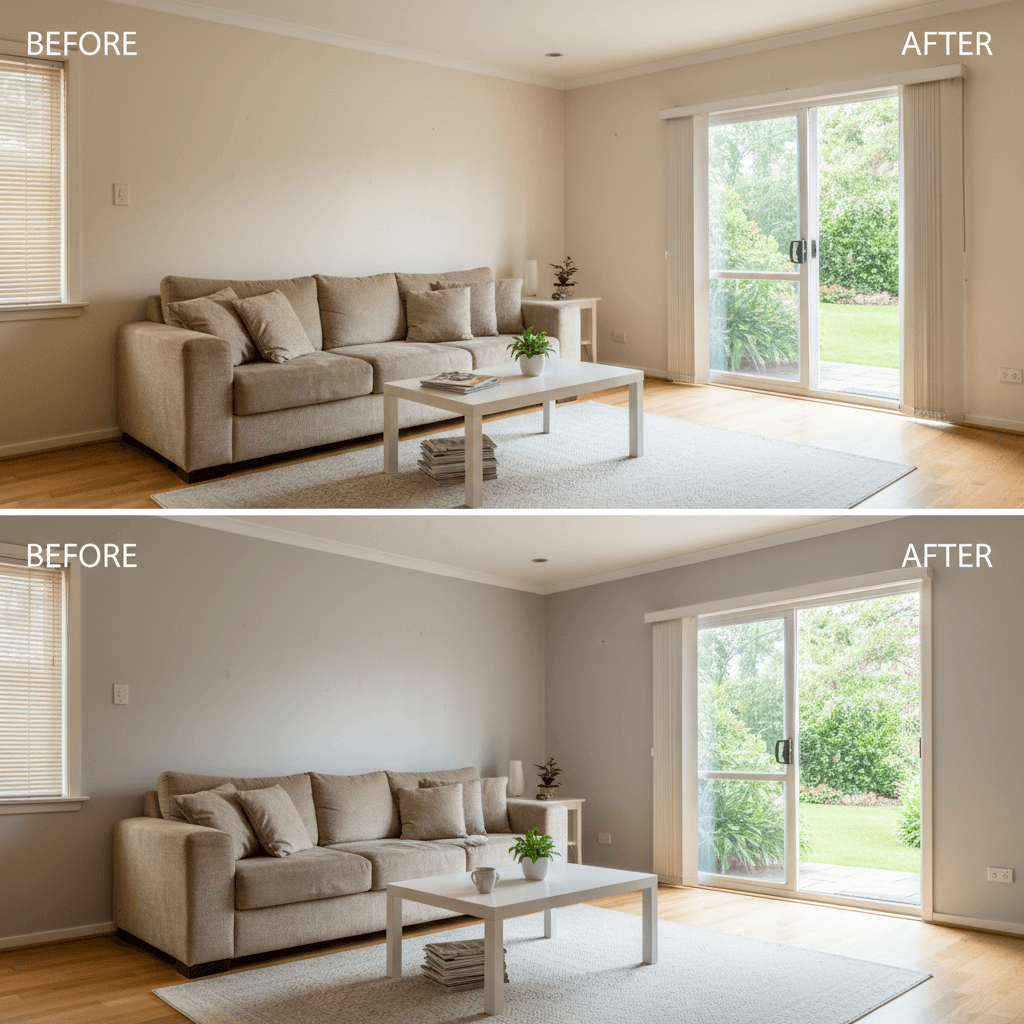
How Much Photo Manipulation is Acceptable in Real Estate Photography?
In the competitive world of real estate, high-quality visuals are paramount for attracting potential buyers and renters. Agents often seek to present properties in their best light, which naturally involves some level of photo enhancement. However, a critical line exists between enhancing an image to accurately represent a property and altering it in a way that misleads or deceives.
Understanding this boundary is crucial not only for maintaining professional integrity but also for fostering trust with clients and avoiding potential legal repercussions. The goal is always to showcase a property's true potential without creating false expectations.
Defining Acceptable Photo Manipulation in Real Estate
Acceptable photo manipulation in real estate photography generally refers to enhancements that correct technical flaws, improve visual appeal, and highlight a property's features without altering its fundamental characteristics or creating an unrealistic portrayal. This includes adjustments like color correction, exposure balancing, lens distortion correction, sharpening, and removing minor blemishes (e.g., a stray leaf or small dirt spot on a walkway). Basic decluttering, such as digitally removing a small trash can, can also fall within acceptable limits if it doesn't change the perception of space or existing features.
However, it becomes unethical when manipulation fundamentally changes the property's appearance. This includes adding or removing permanent fixtures, altering structural elements, obscuring significant flaws (like cracks or water damage), adding views that don't exist, or digitally widening rooms to appear larger than they are. The core principle is that the photograph should enable a prospective buyer to form an accurate expectation of what they will see during a physical visit.
Why Ethical Photography Matters for Real Estate Listings
The ethical use of photo manipulation directly impacts an agent's credibility, buyer trust, and the efficiency of the sales process. When photos are overly manipulated or deceptive, they can lead to significant disappointment during showings, wasting everyone's time and potentially damaging an agent's reputation. Buyers who feel misled are less likely to trust the agent or brokerage in future interactions, leading to negative reviews and a tarnished brand.
Transparent and accurate photography fosters trust, which is the cornerstone of any successful real estate transaction. It ensures that interested parties arrive with realistic expectations, leading to more productive showings and a smoother path to closing. Ultimately, honest representation through photography helps qualify leads more effectively, attracting buyers who are genuinely interested in the property as it truly exists.
Common Mistakes Agents Make with Listing Photos
Real estate agents, often under pressure to make listings stand out, can sometimes cross the line unintentionally or due to lack of awareness. Common mistakes include:
- Over-saturating colors: Making lawns unnaturally green or skies impossibly blue, creating an artificial feel.
- Adding or removing elements: Digitally inserting furniture into an already furnished room, adding landscaping features that aren't there, or removing power lines that are clearly visible.
- Distorting dimensions: Using wide-angle lenses excessively without correction, making rooms appear much larger than they are in reality, or stretching images to fill frames.
- Concealing major flaws: Removing visible cracks in walls, water stains, or outdated fixtures that would be immediate red flags during a showing.
- Misrepresenting views: Adding a sunset view that isn't possible from the property or digitally replacing a cluttered backyard with a pristine garden.
How Professionals Approach This Differently
Professional real estate photographers are trained not only in technical photography skills but also in the ethical considerations specific to the industry. They understand that their role is to showcase a property's best features truthfully. Their approach typically involves:
- Expert lighting and composition: Using natural and artificial light effectively and employing strong compositional techniques to make spaces look appealing without distortion.
- Judicious post-processing: Applying enhancements like color correction, exposure adjustment, and minor blemish removal while strictly adhering to the principle of accurate representation. They know where to draw the line.
- Virtual staging with transparency: When virtual staging is used for vacant properties, professionals ensure it is clearly communicated to potential buyers, often through disclaimers or by presenting both original and staged photos. The virtual furniture is added to an empty space, not replacing existing items.
- Focus on 'as-is' potential: Highlighting a property's potential through angles and styling, rather than through deceptive digital alterations. They capture what is truly present in the best possible way.
- Adherence to industry standards: Many professional organizations have codes of ethics that guide their photography practices, ensuring consistency and integrity across the industry.
By understanding and upholding ethical standards in real estate photography, agents can build stronger reputations and facilitate more successful transactions. For professional and ethical real estate photography services that accurately represent your listings and build buyer trust, consider partnering with Dooorbell.
Related Topics
Explore more insights on these related topics: