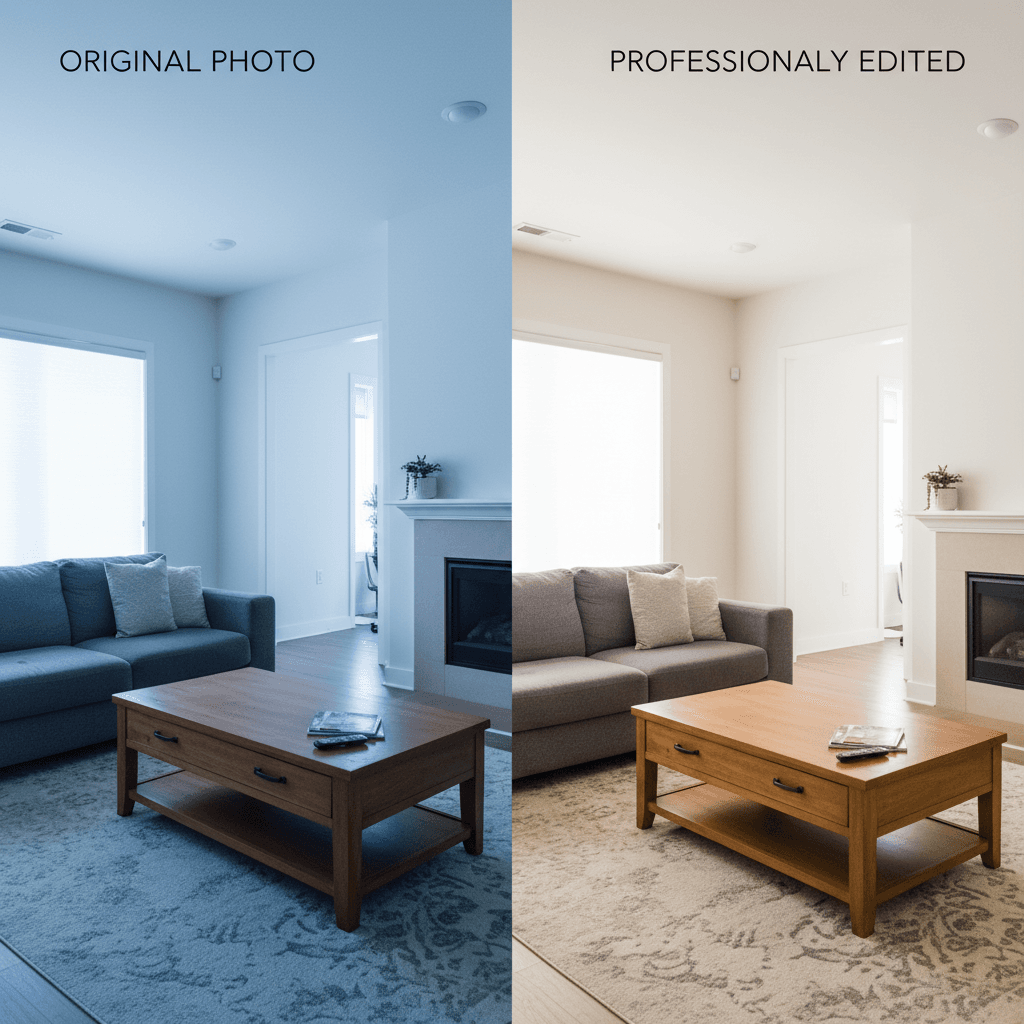
How much photo editing is acceptable for real estate listings?
Real estate photos are crucial for attracting potential buyers and renters. In today's digital age, photo editing is an essential step in creating compelling visuals. However, agents often wonder where to draw the line between enhancing a property's appeal and misrepresenting it. Understanding acceptable editing practices is key to maintaining trust and avoiding ethical pitfalls, ensuring your listings accurately reflect the property's true value.
Direct answer to the question
Acceptable photo editing for real estate listings focuses on enhancing the visual presentation without altering the property's factual characteristics. This includes corrections for lighting, color accuracy, sharpness, and minor cosmetic touch-ups that reflect the property's true state. Editing should aim to present the home in its best light, as if seen on a bright, clear day, rather than creating features that do not exist or removing permanent imperfections. The goal is to accurately represent the property's potential while correcting photographic limitations, such as poor lighting or color casts.
Why this matters for real estate listings
The quality and integrity of your listing photos directly impact buyer perception, trust, and ultimately, sales speed. Over-edited or misleading photos can lead to buyer disappointment during showings, as the property fails to match the online representation. This erodes trust in the agent and results in wasted time for all parties involved. Conversely, well-edited, accurate photos build credibility, manage expectations effectively, and highlight a property's best features honestly, attracting more qualified leads. Transparency in visual representation fosters a smoother transaction process, reduces fall-throughs due to mismatched expectations, and significantly enhances an agent's professional reputation.
Common mistakes agents make
Real estate professionals sometimes inadvertently cross the line in photo editing, leading to unintended consequences. Here are common pitfalls to avoid:
- Excessive saturation or contrast: Making colors unnaturally vibrant can make rooms appear artificial and unappealing in person, leading to a disconnect during physical showings.
- Distorting dimensions: While wide-angle lenses are common, improper correction can warp perspectives, making rooms seem significantly larger or narrower than they are. Skilled photographers correct for this distortion to maintain realistic proportions.
- Removing permanent fixtures or features: Erasing visible power lines, cracks in driveways, dated but functional fixtures (like an old water heater visible in a utility closet), or natural property boundaries can be seen as misrepresentation.
- Adding items that aren't there: This includes digitally inserting lush landscaping where none exists, creating a new view, or adding furniture without clearly labeling it as virtual staging. Authenticity is paramount.
- Altering external elements unrealistically: Changing sky colors from overcast to bright blue or removing neighboring properties entirely can mislead viewers about the surrounding environment and curb appeal.
- Over-whitening or brightening: While enhancing brightness is good, making everything stark white can strip away texture and warmth, making spaces feel sterile and unnatural.
How professionals approach this differently
Professional real estate photographers understand the delicate balance between enhancement and integrity. Their approach involves a combination of technical skill and ethical judgment:
- Expert color correction and white balance: Professionals meticulously ensure colors are true to life and white elements appear neutral, preventing undesirable color casts from artificial or mixed lighting conditions.
- Exposure blending and HDR techniques: They use advanced methods, such as combining multiple exposures, to capture a full range of light, from bright windows to shadowed corners, without blowing out highlights or crushing shadows. This creates a realistic view that closely mimics what the human eye perceives.
- Lens distortion correction: Using specialized software, they meticulously correct the natural bending of lines that occurs with wide-angle lenses, ensuring walls, doorways, and structural elements appear straight and natural.
- Minor blemish removal: Careful, subtle removal of temporary distractions like dust spots, minor scuffs on an otherwise clean floor, or a stray leaf on the lawn is acceptable, provided it does not alter permanent features or hide actual damage.
- Consistent aesthetic: Applying a uniform editing style across all images for a cohesive, professional look builds a strong visual brand for the listing and the agent.
- Ethical guidelines: Adhering to industry standards and client expectations for truthful representation, professionals focus on presenting the property accurately and attractively without deception.
Presenting a property accurately and attractively requires a keen eye for detail and skilled post-production. Dooorbell provides professional real estate photography services, ensuring your listings stand out with images that are both stunning and true to life.
Related Topics
Explore more insights on these related topics: