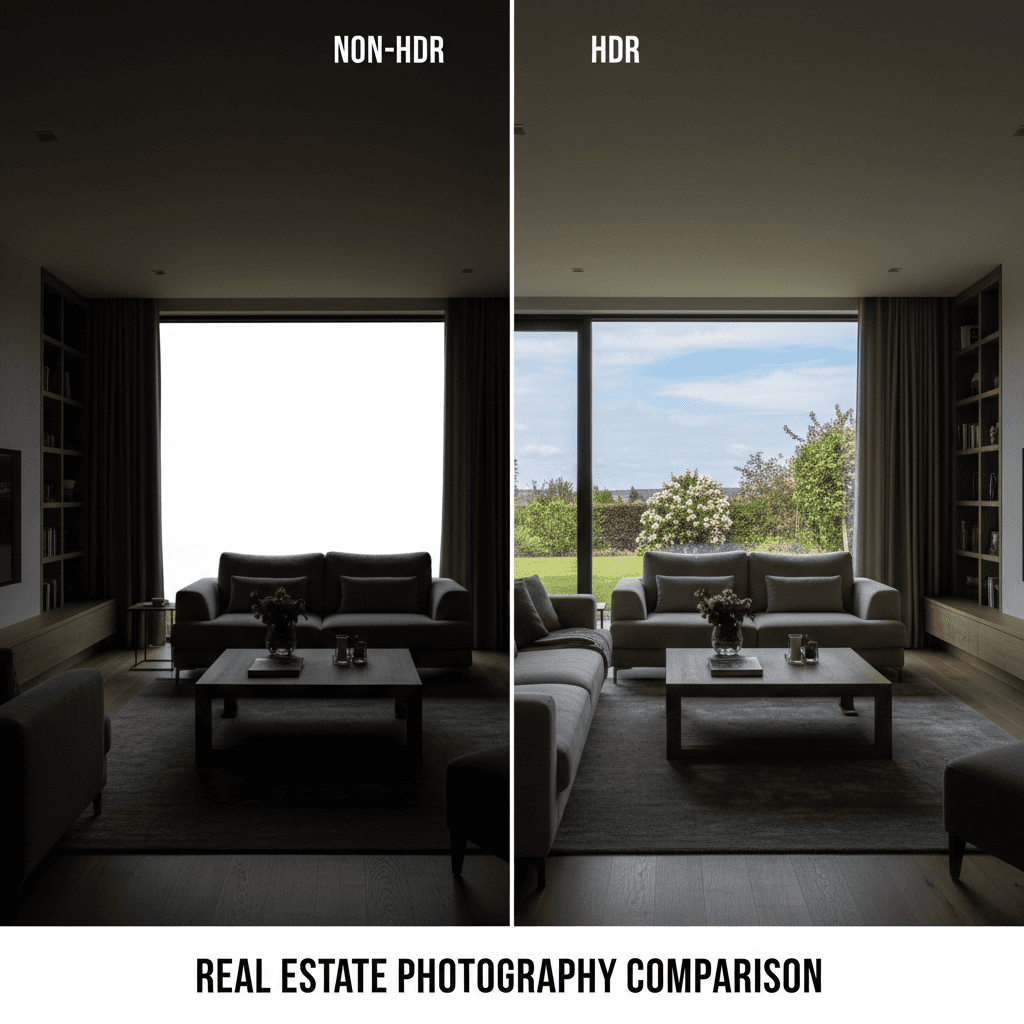
What is High Dynamic Range (HDR) Photography and Why is it Crucial for Real Estate Listings?
Real estate photography presents a unique challenge: simultaneously capturing the bright views outside a window and the often darker interior of a room. A standard camera struggles to manage this wide range of light, often resulting in either "blown out" (overexposed) windows or dark, underexposed interiors. This common issue can make a property appear less appealing and professional online.
High Dynamic Range (HDR) photography is a technique where a photographer captures multiple images of the same scene at different exposure levels – typically one underexposed (darker), one correctly exposed (mid-tone), and one overexposed (brighter). These bracketed images are then carefully blended in post-processing to create a single photograph that accurately represents the full spectrum of light in the scene. The result is an image where details are visible in both the brightest highlights and the deepest shadows, closely mimicking how the human eye perceives light.
For real estate listings, HDR photography is not merely a stylistic choice; it's a fundamental technique for accurate and appealing representation. It ensures that potential buyers can see the stunning view outside a living room window while simultaneously appreciating the intricate details of the room's interior. Without HDR, agents often face a compromise: either the exterior view is washed out, or the interior is too dark to showcase features effectively. HDR prevents these issues, creating a more realistic, inviting, and professional image that captures the property's true essence. This improved visual quality can significantly increase online engagement, reduce buyer disappointment during showings, and ultimately help properties sell or lease faster.
When attempting real estate photography without professional techniques like HDR, agents often fall into several common pitfalls:
- Single Exposure Limitations: Relying on a single shot often means choosing between a well-exposed interior or a well-exposed exterior. This leads to blown-out windows or shadowy rooms.
- Over-editing to Compensate: Agents may try to manually adjust a single photo in editing software to brighten shadows or dim highlights, which frequently results in an unnatural, artificial look with distorted colors or halos.
- Ignoring Lighting Dynamics: Underestimating the complexity of indoor lighting, especially with mixed natural and artificial light sources, leads to inconsistent exposure and white balance issues.
- Using Consumer-Grade Equipment: While modern smartphones are capable, they often lack the sensor size and bracketing capabilities needed to capture the full dynamic range required for high-quality real estate HDR.
Professional real estate photographers leverage their expertise and equipment to ensure superior results, particularly with HDR:
- Specialized Equipment: They use high-quality cameras with excellent dynamic range and tripod setups to ensure perfect alignment across multiple exposures.
- Precision Bracketing: Professionals meticulously capture several bracketed exposures for each shot, often 5-7 or more, to gather maximum light information.
- Advanced Blending Techniques: Rather than just merging, professional photographers use sophisticated software and manual blending techniques to combine exposures seamlessly, ensuring a natural look without exaggerated effects.
- Natural Appearance Focus: The goal is always a natural, inviting image that accurately represents the property, avoiding the overly-processed, cartoonish look sometimes associated with poorly executed HDR.
- Color Accuracy and White Balance: Experts understand how different light sources affect color and ensure accurate white balance across all exposures, resulting in true-to-life colors.
Dooorbells's professional real estate photography services utilize advanced techniques like HDR to capture your listings with impeccable visual quality, ensuring every detail shines.
Related Topics
Explore more insights on these related topics: