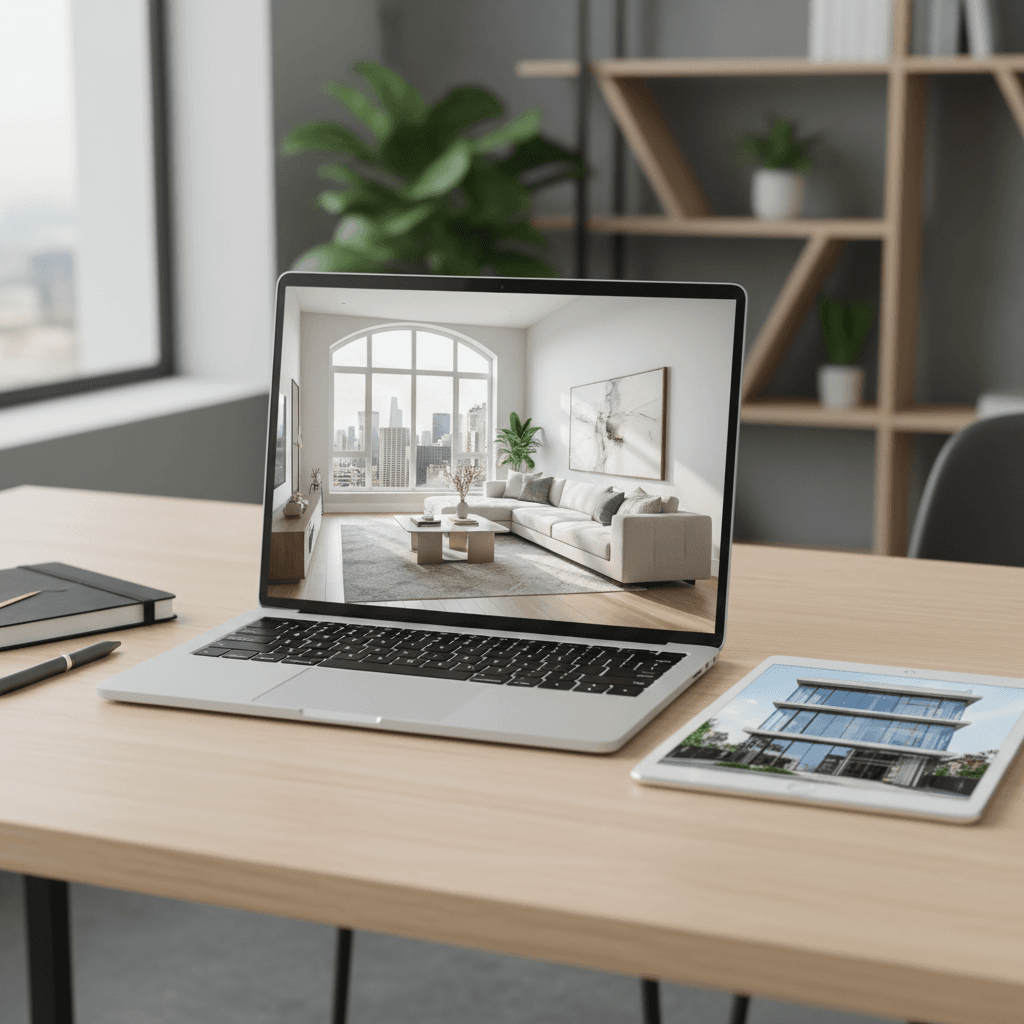
What Are the Ideal Photo Dimensions and Aspect Ratios for Real Estate Listings?
In the competitive real estate market, high-quality visuals are non-negotiable. Yet, even the most stunning photographs can lose their impact if not displayed correctly. Real estate agents frequently encounter challenges with images appearing cropped, stretched, or pixelated across different listing platforms and social media, directly affecting a property's perceived value and a buyer's first impression. Understanding the optimal photo dimensions and aspect ratios is crucial for ensuring your listings always look their best.
Understanding Aspect Ratios and Dimensions for Real Estate Photography
An image's aspect ratio describes the proportional relationship between its width and height (e.g., 4:3, 16:9). Dimensions refer to the actual pixel count (e.g., 2048px by 1536px). While many MLS systems and listing sites automatically resize images, they often do so by cropping, which can remove critical parts of your carefully composed shots.
Most real estate photography benefits from a 4:3 or 3:2 aspect ratio for interiors and general shots, as these mimic traditional camera formats and provide a balanced view. For wide exterior shots or drone photography, a 16:9 widescreen ratio can be effective.
In terms of dimensions, the common recommendation for MLS is to have the longest side of the image at least 1280 pixels, with many now preferring 2048 pixels for maximum clarity. Specific platforms like Zillow, Trulia, Realtor.com, and even social media sites like Instagram (1:1, 4:5) and Facebook (1.91:1) have their own recommendations. It's not about a single "ideal" size, but rather adapting to the requirements of where your photos will be displayed.
Why Correct Photo Sizing Matters for Real Estate Listings
The way your listing photos are presented directly influences buyer engagement and perception. Incorrectly sized or ratioed images can lead to several problems:
- Unprofessional Appearance: Photos that are stretched, compressed, or awkwardly cropped immediately signal a lack of attention to detail, which can reflect poorly on the property and the agent.
- Lost Detail: Automatic cropping by listing platforms can cut out key features, windows, or even entire rooms, diminishing the visual story you're trying to tell.
- Reduced Engagement: Buyers are less likely to spend time on a listing with poor-quality or poorly displayed visuals. First impressions are everything in online browsing.
- Slower Sales Cycle: Listings with visually appealing and correctly formatted images tend to attract more interest, generate more showings, and ultimately sell or lease faster. A seamless visual experience keeps potential buyers on your listing longer.
Common Mistakes Real Estate Agents Make with Image Sizing
Even experienced agents can inadvertently make errors when managing listing photos. Here are some common pitfalls:
- Uploading Original RAW/High-Res Files Directly: While high resolution is good, excessively large file sizes can slow down page loading times, negatively impacting user experience and SEO.
- Ignoring Platform-Specific Guidelines: Assuming one size fits all across MLS, personal websites, and social media leads to inconsistent presentation.
- Cropping Without Considering Composition: Manually cropping images to fit a specific ratio without understanding how it affects the visual balance and message of the photo.
- Using Screenshots or Low-Resolution Images: Displaying pixelated or blurry images because they were sourced incorrectly or not sized for display.
- Not Optimizing for Mobile: Many buyers browse on mobile devices. Images that don't scale well or load slowly on mobile can lead to immediate abandonment.
How Professionals Ensure Perfect Image Presentation
Professional real estate photographers do more than just capture stunning images; they deliver them optimized for immediate use across various platforms. This includes:
- Delivering Multiple Formats: Providing image sets optimized for MLS, web, and social media, often with specific aspect ratios and resolutions for each.
- Expert Cropping and Resizing: Skilled editors know how to crop and resize images intelligently, preserving composition and key details while meeting technical specifications.
- Balancing Quality and File Size: Professionals ensure images are high-resolution enough for clarity but compressed sufficiently for fast loading times without visible quality degradation.
- Adherence to Best Practices: Staying updated on evolving platform requirements and implementing best practices for image delivery and usage.
- Consultation: Offering guidance to agents on how best to upload and display their images to maximize impact.
Dooorbells provides expertly captured and precisely processed real estate photography, ensuring your listings are presented flawlessly across all platforms. We handle the technical details, so your focus remains on closing the deal.
Related Topics
Explore more insights on these related topics: