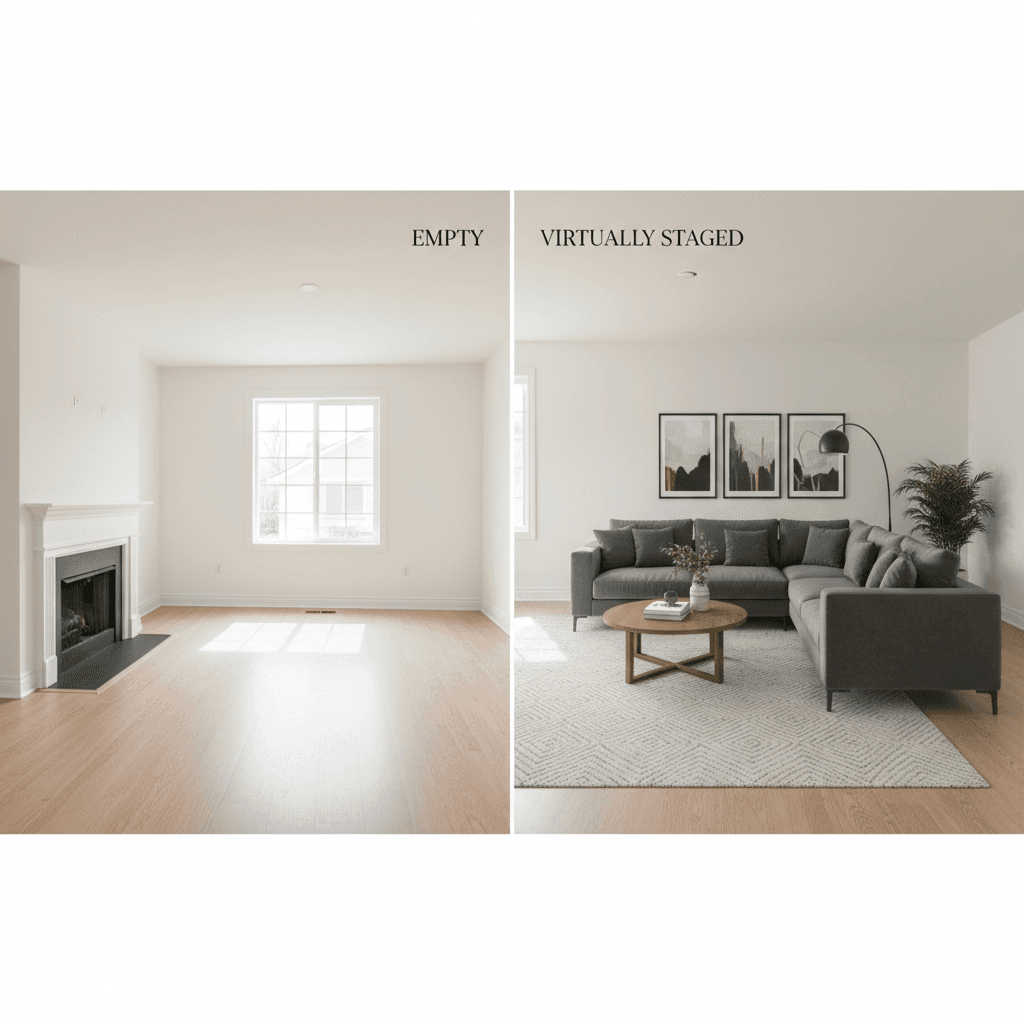
Is Virtual Staging an Effective Solution for Selling Vacant Real Estate Listings?
Vacant properties often present a unique challenge for real estate agents, brokers, and property managers. Without furniture and decor, empty rooms can feel cold, uninviting, and lack a sense of scale, making it difficult for potential buyers to visualize themselves living in the space. This can lead to longer market times and potentially lower offers, as buyers struggle to connect emotionally with an unadorned property.
Virtual staging is a digital process where furniture, decor, and accessories are added to photographs of empty rooms. Instead of physically moving in items, skilled designers use specialized software to create photorealistic renderings of a furnished space. This technique transforms a barren room into an appealing, lived-in environment, allowing prospective buyers to clearly see the property's potential and envision how their own furniture might fit.
By showcasing a property's true potential, virtual staging helps bridge the imagination gap for buyers. It highlights the functionality and spaciousness of each room, making it easier for individuals to picture their lifestyle within the home. This visual enhancement is a cost-effective and flexible alternative to traditional physical staging, which often involves significant logistical challenges and expenses.
Virtual staging offers several compelling advantages for real estate professionals working with vacant properties:
- Increased Buyer Engagement: Staged homes, even virtually, capture more attention online. Listings with virtually staged photos tend to receive more clicks and longer viewing times, as buyers are naturally drawn to aesthetically pleasing and aspirational images.
- Faster Sales Cycles: When buyers can easily visualize a property as their future home, they are more likely to make a decision sooner. This often translates to reduced days on market, getting the property sold or leased more quickly.
- Enhanced Perceived Value: A well-staged home, even if virtually, appears more valuable and well-maintained. This can justify the asking price and potentially lead to higher offers, as buyers connect with the lifestyle portrayed.
- Wider Audience Appeal: Virtual staging can be tailored to appeal to specific demographics or design tastes without the physical limitations of real furniture. This broadens the property's appeal and makes it relatable to a diverse range of potential buyers.
- Cost-Effectiveness and Flexibility: Compared to traditional staging, virtual staging eliminates the costs of renting, moving, and maintaining physical furniture. It also allows for quick changes to styling or furniture placement, offering unparalleled flexibility.
While highly effective, virtual staging can backfire if not executed correctly. Here are common pitfalls:
- Unrealistic or Low-Quality Furniture: Using poorly rendered or obviously fake-looking furniture undermines credibility and detracts from the property's appeal.
- Inconsistent Styling: Staging different rooms in wildly different styles can create a disjointed feel, confusing potential buyers.
- Over-Staging or Clutter: Just like physical staging, virtual staging should enhance, not overpower, the space. Too much furniture or decor can make rooms feel small or cluttered.
- Failure to Disclose: Transparency is crucial. Agents should always disclose in the listing description that photos are virtually staged to maintain trust and avoid misleading buyers.
- Ignoring Property Features: Staging should complement the home's architectural style and unique features, not clash with them.
Professional virtual staging goes beyond simply dropping furniture into a photo. It involves a strategic and artistic approach that maximizes a property's appeal:
- High-Fidelity Rendering: Professionals use advanced software and skilled artists to create photorealistic furniture and decor that blends seamlessly with the existing photography, making it difficult to distinguish from real staging.
- Strategic Design & Styling: Expert virtual stagers consider the property's architecture, target demographic, and natural light to select furniture and decor that enhances the home's best features and appeals to the ideal buyer.
- Attention to Detail: From the realistic shadows and lighting to the precise placement of accessories, every detail is carefully considered to create a believable and inviting scene.
- Ethical Practices: Reputable virtual staging providers ensure that the original structure of the room is maintained and that disclosures are recommended or provided to ensure transparency.
- Integration with Professional Photography: The best results come from combining virtual staging with high-quality, professional photography. This ensures the base images are excellent, allowing the virtual elements to shine without looking superimposed.
Collaborating with a professional service like Dooorbell for your real estate photography and virtual staging needs ensures your vacant listings are presented in their best light, capturing buyer interest and accelerating sales.
Related Topics
Explore more insights on these related topics: