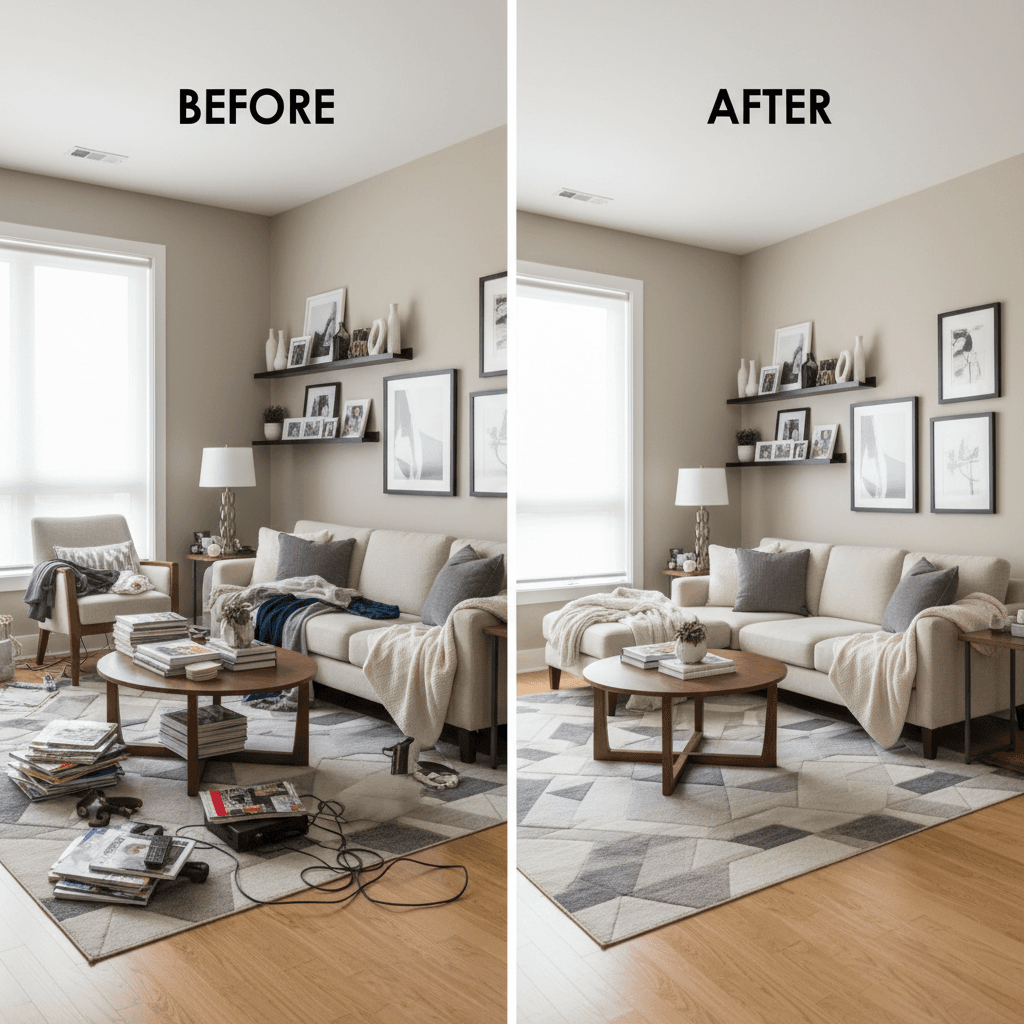
How Should Real Estate Agents Prepare a Home for Professional Photography?
Real estate photography is crucial for attracting potential buyers, but even the most skilled photographer can't fully compensate for a poorly prepared property. Agents often wonder about the most effective ways to ensure a home is photo-ready, maximizing its appeal and the impact of professional visuals. This preparation goes beyond simple tidying; it involves strategic staging to highlight a property's best features and create an inviting atmosphere for online viewers.
The Essential Steps to Prepare a Home for Photography
Preparing a home for real estate photography primarily involves decluttering, deep cleaning, depersonalizing, and making minor aesthetic adjustments. The overarching goal is to create a spacious, neutral, and inviting environment that allows potential buyers to easily envision themselves living there. This preparation must extend to both interior and exterior areas, ensuring every angle presented online is optimized to showcase the property's full potential and eliminate distractions.
Why This Preparation Matters for Real Estate Listings
A meticulously prepared home significantly impacts listing performance across various metrics. High-quality, clean, and appealing photographs capture buyer attention within seconds, leading to more clicks on the listing, longer viewing times, and a higher volume of showing requests. Properties with professionally prepared visuals often sell faster and, in many cases, for a higher price, as buyers form an immediate emotional connection and perceive greater value. Conversely, cluttered, dirty, or poorly presented homes deter interest, causing listings to linger on the market and potentially necessitate price reductions.
Common Preparation Mistakes Agents Make
Even experienced agents can overlook crucial details during the preparation phase. Avoiding these common errors can significantly enhance your listing's visual appeal:
- Underestimating the "pre-shoot" cleanup: Assuming a quick tidy is sufficient, rather than investing in a thorough deep clean and comprehensive decluttering effort that goes beyond surface-level tidying.
- Leaving personal items visible: Family photos, excessive personal decor, or unique memorabilia can prevent potential buyers from envisioning themselves and their own lives in the space.
- Ignoring minor repairs and maintenance: Small issues like chipped paint, leaky faucets, burnt-out light bulbs, or visible scuff marks are often noticeable in high-resolution photos and can subtly suggest neglect or deferred maintenance to buyers.
- Overlooking exterior presentation: Neglecting landscaping, leaving clutter on driveways or porches, or failing to clean the entrance can compromise the all-important first impression online.
- Poor communication with sellers: Failing to provide clear, actionable checklists or comprehensive instructions to homeowners on what specific steps they need to take to prepare their property for the shoot.
- Inadequate lighting considerations: Not ensuring all light fixtures have working bulbs and that window coverings are optimally adjusted to maximize natural light and overall brightness.
How Professionals Approach Home Preparation Differently
Experienced real estate professionals understand that thorough home preparation is an integral and strategic part of the marketing process. They typically employ a more structured and proactive approach:
- Provide a detailed, room-by-room checklist: They equip sellers with a comprehensive guide that covers every room, exterior space, and specific items to remove, clean, or arrange, ensuring no detail is missed.
- Recommend professional staging services: For vacant or challenging properties, they often advise engaging professional stagers to optimize furniture layouts, select appropriate decor, and enhance the overall aesthetic appeal.
- Schedule sufficient buffer time: They allocate extra time before the photographer's arrival for final touch-ups, last-minute adjustments, and to address any overlooked details identified during a pre-shoot walkthrough.
- Conduct a critical pre-inspection: Before the shoot, they perform a walk-through, viewing the home through the eyes of a potential buyer. This helps them identify and rectify any visual distractions or areas for improvement.
- Focus on flow and focal points: Professionals ensure each room has a clear purpose and that furniture arrangements highlight architectural features, natural light, or desirable views.
- Coordinate effectively with the photographer: They communicate specific angles, unique features, or particular selling points to the photographer beforehand, ensuring the home's best attributes are captured effectively.
FAQs About Home Preparation for Photography
How long before the shoot should a home be prepared?
Ideally, major decluttering, deep cleaning, and any necessary repairs should be completed 1-2 days before the scheduled shoot. This allows for final light tidying and touch-ups on the day of the photography session.
Should I remove all furniture?
No, it's not necessary to remove all furniture. The goal is to have minimal, appropriately scaled furniture that defines the room's purpose and allows for clear movement and photographic angles. Remove excess, oversized, or mismatched pieces that can make a room feel cramped or cluttered.
What about pets and pet-related items?
For the duration of the photography shoot, all pets and any pet-related items—such as food bowls, beds, toys, crates, and litter boxes—should be completely removed from sight or taken off the property entirely to ensure a clean, neutral, and pet-free appearance.
Ensuring a property is impeccably prepared allows professional real estate photography to truly shine, significantly enhancing buyer interest and accelerating sales. Dooorbell specializes in capturing properties at their absolute best, offering a range of visual solutions designed to elevate your listings and attract more qualified buyers.
Related Topics
Explore more insights on these related topics: