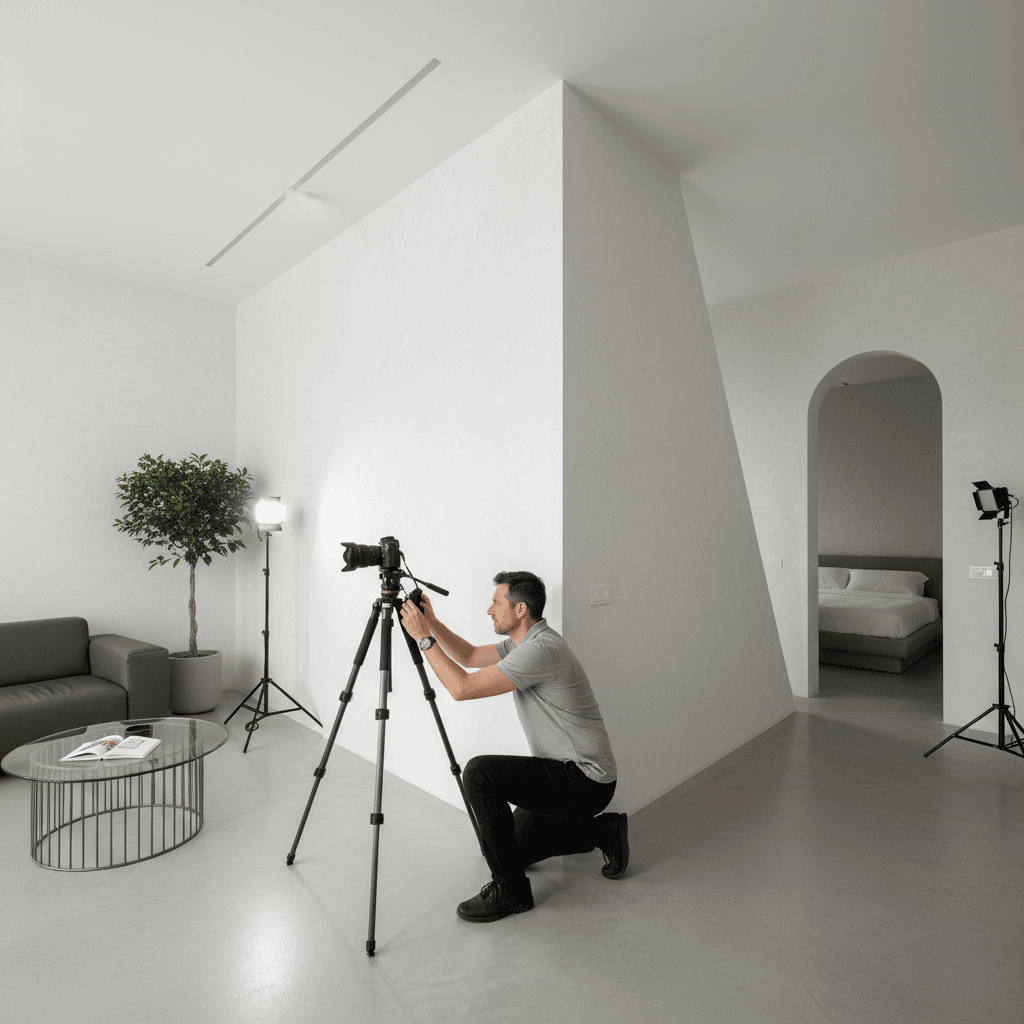
How Do You Effectively Photograph Properties with Challenging or Awkward Layouts?
Not every property boasts an open-concept design or perfectly symmetrical rooms. Many homes, especially older ones or unique architectural builds, feature challenging or awkward layouts that can be difficult to showcase effectively through photography. When not handled correctly, these spaces can confuse potential buyers, make a property seem smaller, or simply fail to convey its true potential, ultimately hindering buyer interest and slowing down the sales or leasing process.
Strategically Capturing Difficult Property Layouts
Effectively photographing properties with challenging or awkward layouts involves a combination of strategic equipment use, careful composition, and a deep understanding of how buyers perceive space. The goal is to guide the viewer's eye through the property, highlighting its flow and unique characteristics rather than its perceived flaws. This can be achieved by employing wide-angle lenses judiciously, framing shots to emphasize transitions between spaces, maintaining consistent eye-level perspectives, and leveraging virtual tools like floor plans or 3D tours to provide context.
Why This Matters for Real Estate Listings
Poorly photographed challenging layouts create visual confusion, making spaces appear smaller and less functional than they are. This can significantly reduce buyer interest, lead to fewer showings, and prolong a property's time on the market. When potential buyers cannot easily visualize themselves living or working in a space, or understand its unique flow, they are less likely to proceed. Conversely, thoughtful photography that navigates these challenges effectively can transform perceived negatives into unique selling points, helping buyers understand the property's character and functional possibilities, which ultimately accelerates sales or rentals.
Common Mistakes Agents Make
Real estate agents, even with good intentions, often encounter specific pitfalls when attempting to photograph properties with challenging layouts:
- Using standard smartphone cameras without wide-angle capabilities: This often results in distorted or cramped images that fail to capture the full scope of a room or its connections to other areas.
- Inconsistent angles or perspectives: Varying camera heights and angles from room to room can disorient viewers and make the property's overall layout difficult to grasp.
- Not showing transitions between rooms: Failing to include doorways or visual pathways between spaces makes the layout feel disjointed rather than cohesive.
- Ignoring awkward corners or dead space: Attempting to crop out challenging areas can leave the viewer wondering what's missing, or make the space feel incomplete.
- Over-editing to hide flaws: While minor touch-ups are acceptable, excessive editing to conceal architectural quirks can lead to unrealistic expectations and buyer disappointment during showings.
How Professionals Approach This Differently
Professional real estate photographers possess the expertise and equipment to transform challenging layouts into compelling visual narratives:
Strategic Lens Use
They utilize wide-angle lenses to capture more of a room, but they do so carefully to minimize distortion, ensuring that walls remain straight and proportions accurate. The choice of lens and focal length is tailored to each unique space.
Emphasizing Flow and Connection
Professionals compose shots that naturally guide the eye from one area to another, often including doorways or visual cues that connect adjacent rooms. This helps viewers understand the property's overall flow and how spaces relate to each other.
Highlighting Unique Features
Instead of hiding an unusual architectural element, a professional photographer can frame it in a way that turns it into a distinctive feature, adding character and memorability to the listing.
Consistent Perspective and Compositional Skill
Maintaining a consistent camera height and level angle across all rooms provides a coherent and understandable visual journey. Professionals also employ advanced compositional techniques, such as leading lines and strategic framing, to create depth and visual interest even in irregular or narrow spaces.
Lighting Expertise
Effective lighting is crucial. Professionals use supplemental lighting and advanced techniques to properly expose challenging areas, ensuring every corner is well-lit and defined, preventing dark, uninviting spaces.
Complementary Visual Tools
Beyond still photography, professionals often recommend integrating floor plans, 3D tours, or video walkthroughs. These tools provide invaluable context, allowing potential buyers to fully grasp the property's layout and dimensions, thereby clarifying any ambiguities from the photographs alone.
Showcasing a property's unique layout doesn't have to be a challenge. Dooorbell offers expert real estate photography and visual solutions, understanding how to showcase even the most unique properties effectively, ensuring every angle tells a compelling story.
Related Topics
Explore more insights on these related topics: